U.S. Road Signs: Warning signs 2026
W1 series Horizontal alignment
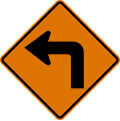
Warns of a sharp turn to the left ahead. Reduce speed before entering the abrupt change in road direction.
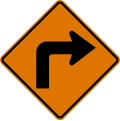
Warns of a sharp turn to the right ahead. Slow down before the road bends abruptly to the right.
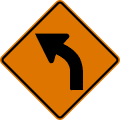
Warns of a curve bending to the left ahead. Ease off your speed and steer smoothly through the bend.
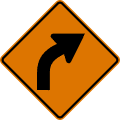
Warns of a curve bending to the right ahead. Adjust your speed before the roadway sweeps to the right.
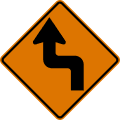
Warns of a reverse turn that swings sharply left then back to the right. Slow well ahead of the double bend.
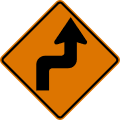
Warns of a reverse turn that swings sharply right then back to the left. Reduce speed for the paired sharp bends.
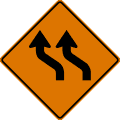
Warns that the roadway makes a double lane shift toward the left. Follow the offset path and stay centered in your lane.
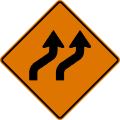
Warns that the roadway makes a double lane shift toward the right. Track the offset alignment carefully as the lane moves over.
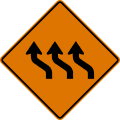
Warns of a triple lane shift to the left ahead. The travel lane offsets repeatedly, so keep steering to stay aligned.
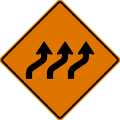
Warns of a triple lane shift to the right ahead. Expect the lane to jog over several times and follow the markings.
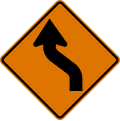
Warns that the lane shifts once to the left. Steer gently to follow the roadway's sideways offset.
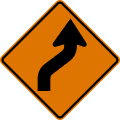
Warns that the lane shifts once to the right. Guide your vehicle along the offset alignment ahead.
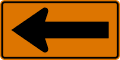
A large one-direction arrow pointing left, marking a sharp change of direction that drivers must follow to the left.
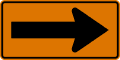
A large one-direction arrow pointing right, marking a sharp change of direction that drivers must follow to the right.
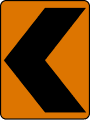
A chevron alignment marker pointing left, placed in series along a curve to guide drivers through the leftward bend.
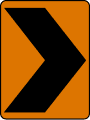
A chevron alignment marker pointing right, spaced along a curve to steer drivers through the rightward bend.
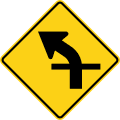
Warns of a curve to the left with a crossroad located within the curve. Watch for turning and entering traffic as you round it.
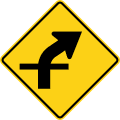
Warns of a curve to the right with a crossroad inside the curve. Be alert for vehicles at the intersection while cornering.
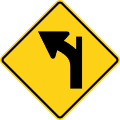
Warns of a left curve with a side road branching off along a tangent. Anticipate turning traffic through the bend.
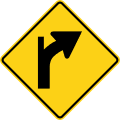
Warns of a right curve with a side road branching off along a tangent. Watch for vehicles entering or leaving through the curve.
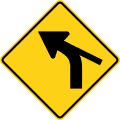
Warns of a left curve where a side road joins from the tangent side. Stay alert for merging traffic as you steer through.
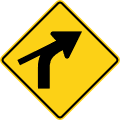
Warns of a right curve where a side road joins from the tangent side. Expect traffic entering as you round the bend.
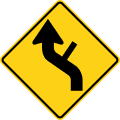
Warns of a reverse curve to the left combined with a side road. Slow for the double bend and watch for entering vehicles.
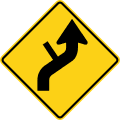
Warns of a reverse curve to the right combined with a side road. Reduce speed and stay alert for traffic joining the roadway.
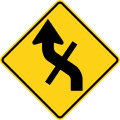
Warns of a reverse curve to the left with a crossroad within it. Slow down and watch for intersecting traffic through the bends.
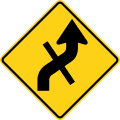
Warns of a reverse curve to the right with a crossroad within it. Reduce speed and be ready for vehicles at the intersection.
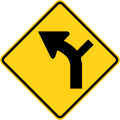
Warns of a curve to the left with a side road entering. Watch for vehicles turning onto or off the roadway as you round it.
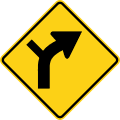
Warns of a curve to the right with a side road entering. Be alert for turning traffic while you steer through the bend.
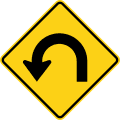
Warns of a hairpin curve bending sharply back to the left. Slow to a low speed before this extreme change in direction.
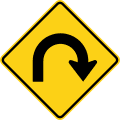
Warns of a hairpin curve bending sharply back to the right. Reduce speed well ahead of this tight, near-reversing bend.
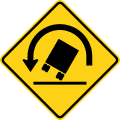
Warns of a left curve where trucks risk rolling over. Heavy vehicles should slow well below the normal speed before the bend.
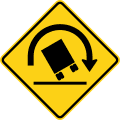
Warns of a right curve where trucks risk rolling over. Commercial drivers should cut speed sharply before entering the curve.
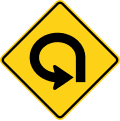
Warns of a 270-degree loop curve turning to the left, such as a ramp that spirals back over itself. Slow considerably before entering.
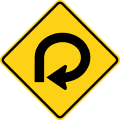
Warns of a 270-degree loop curve turning to the right, like a looping ramp. Reduce speed well ahead of the tight spiral.
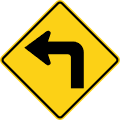
Warns of a sharp turn to the left ahead where the road changes direction abruptly. Slow before you reach the bend.
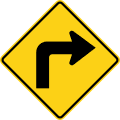
Warns of a sharp turn to the right ahead where the road changes direction abruptly. Ease off the accelerator early.
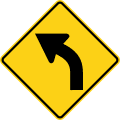
Warns of a gradual curve to the left ahead. Adjust your speed so you can follow the bend safely.
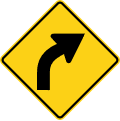
Warns of a gradual curve to the right ahead. Slow as needed and stay centered while the road sweeps around.
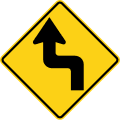
Warns of a reverse turn beginning to the left, with sharp bends first left then right. Reduce speed before the double turn.
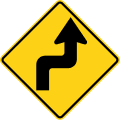
Warns of a reverse turn beginning to the right, with sharp bends first right then left. Slow ahead of the paired turns.
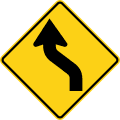
Warns of a reverse curve starting to the left, curving one way then the other. Moderate your speed through both bends.
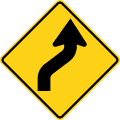
Warns of a reverse curve starting to the right, curving one way then back. Keep a steady, reduced speed through the S-shape.
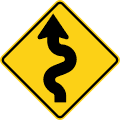
Warns of a winding road with three or more curves ahead, the first bending left. Stay alert and control your speed throughout.
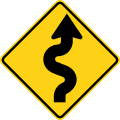
Warns of a winding road with a series of curves ahead, the first bending right. Reduce speed for the succession of bends.
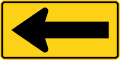
A large arrow pointing left that marks a sharp change in roadway direction, guiding drivers to steer to the left.
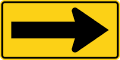
A large arrow pointing right that marks a sharp change in roadway direction, guiding drivers to steer to the right.

A large double-headed arrow marks the head of a T-intersection or dead end where you must turn either left or right; going straight is not possible.

A chevron pointing left marks a sharp change in the roadway alignment, guiding you to steer left through the curve. Several are usually posted along the bend.

A chevron pointing right emphasizes a sharp curve to the right, one of a series mounted along the outside of the bend to help you track the road.
W2 series Intersections
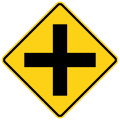
Warns of a crossroad ahead where another road crosses yours. Watch for vehicles entering or crossing from both the left and right.
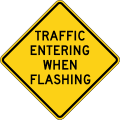
Posted at an intersection with a flashing beacon, this tells you that cross traffic is entering the roadway when the light is flashing, so slow and be ready.
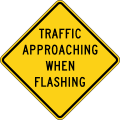
Warns that traffic is approaching the intersection when the beacon flashes; expect vehicles nearing from the crossing road and prepare to yield.
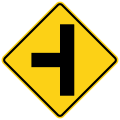
Indicates a side road joining from the left ahead. Watch for vehicles entering or turning where the smaller road meets your route.
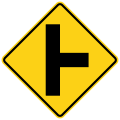
Indicates a side road joining from the right ahead. Be alert for traffic entering or exiting where the side road connects to yours.
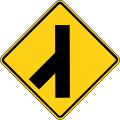
Warns of a side road meeting your route from the left at an obtuse (wide) angle ahead, so watch for merging or crossing traffic from that direction.
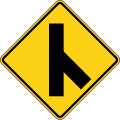
Warns of a side road meeting your route from the right at an obtuse (wide) angle ahead; be ready for vehicles entering from that side.
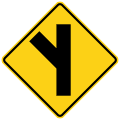
Signals a side road joining from the left at a sharp, acute angle ahead, where approaching drivers may have limited sightlines. Stay alert for merging traffic.
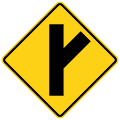
Signals a side road joining from the right at a sharp, acute angle ahead. Watch for vehicles entering at the tight junction.
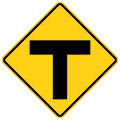
Marks a T-intersection ahead where your road ends at a cross road. Slow down and prepare to turn left or right.
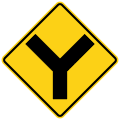
Warns of a Y-intersection ahead where the road splits into two directions. Choose your path and be ready for merging or diverging traffic.
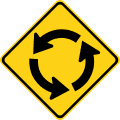
Alerts you to a roundabout ahead. Reduce speed, yield to traffic already circulating, and prepare to enter the circular intersection.
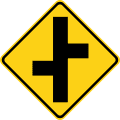
Warns of offset side roads ahead, with the first joining from the left and the next from the right. Watch for traffic entering from both staggered junctions.
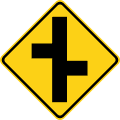
Warns of offset side roads ahead, with the first joining from the right and the next from the left. Stay alert for vehicles at both staggered intersections.
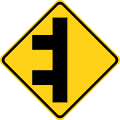
Indicates two closely spaced side roads entering from the left ahead. Watch for traffic joining from either junction.
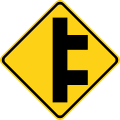
Indicates two closely spaced side roads entering from the right ahead. Be ready for vehicles entering from either junction.
W3 series Advance traffic control
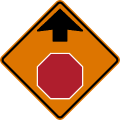
Advance warning that a stop sign lies ahead, giving you time to slow down and prepare to come to a full stop at the intersection.
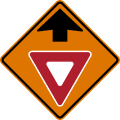
Advance warning of a yield sign ahead. Be ready to slow and give the right of way to traffic at the upcoming junction.
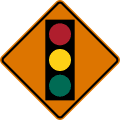
Warns that a signal (traffic light) lies ahead, often where the light is hidden or unexpected, so be prepared to stop.
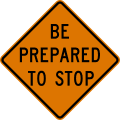
Tells drivers to be prepared to stop, typically paired with a warning of a signal or stop control ahead where queues may form.
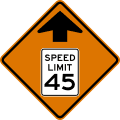
Advance notice of a reduced speed limit ahead, giving you time to begin slowing before the new lower limit takes effect.
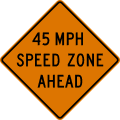
Warns of a speed zone ahead where the posted speed limit changes, so begin adjusting your speed before you reach it.
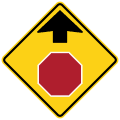
A stop-ahead warning shows a symbolic stop sign, alerting you to a stop control soon so you can slow in time to halt fully.
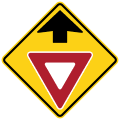
A yield-ahead warning displays a symbolic yield sign, letting you know to prepare to give right of way at the intersection ahead.
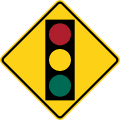
A signal-ahead warning showing a symbolic traffic light, used where an upcoming signal may be hard to see. Be ready to stop.
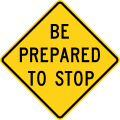
Instructs drivers to be prepared to stop, often near signals or congestion where traffic may back up unexpectedly.
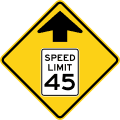
Advance warning that a reduced speed limit lies ahead, giving you distance to slow down before reaching the lower posted speed.
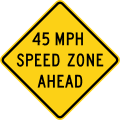
Announces a speed zone ahead with a changing speed limit, prompting you to begin adjusting your speed before entering it.
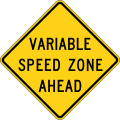
Warns of a variable speed zone ahead where the posted limit can change based on conditions, so watch the displayed speed and adjust accordingly.
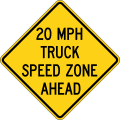
Warns of a truck speed zone ahead where a separate lower speed limit applies to trucks, prompting drivers of large vehicles to prepare to slow.
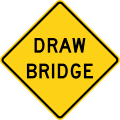
Warns of a reduced-conflict or restricted crossing intersection ahead, alerting drivers to a change in the intersection layout they will encounter.
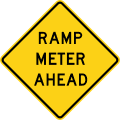
Warns of a ramp control signal ahead used to meter traffic entering a freeway, so be ready to stop and go as directed.
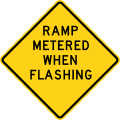
Tells drivers the freeway entrance ramp is metered when the signal is flashing, meaning you must stop and enter one vehicle at a time.
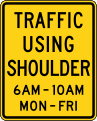
Advises that traffic may use the shoulder as a travel lane during the posted times and days shown, typically to ease peak congestion.
W4 series Lanes and merges
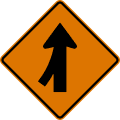
Warns that a lane merges from the left ahead. Watch for vehicles joining your lane and adjust speed to let them blend in.
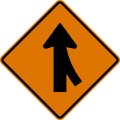
Warns that a lane merges from the right ahead. Be ready for merging vehicles and make room where the lanes join.
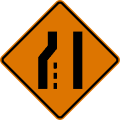
Warns that the left lane ends ahead and traffic must merge right. Plan to move over or allow others to merge safely.
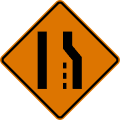
Warns that the right lane ends ahead and traffic must merge left. Prepare to change lanes or give room to merging drivers.
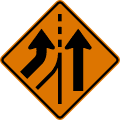
Indicates an added lane on the left ahead where a new lane begins, so merging is not required and traffic can proceed side by side.
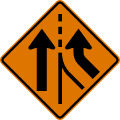
Indicates an added lane on the right ahead; a new lane opens so entering traffic joins without forcing a merge.
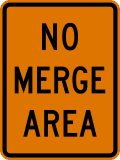
A supplemental plaque reading No Merge Area, mounted with a merge warning to tell drivers there is no dedicated space to merge, so entering traffic must yield.
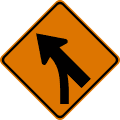
Warns entering drivers that they must merge left onto the through roadway ahead, yielding to traffic already on the main road.
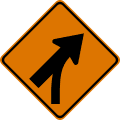
Warns entering drivers that they must merge right onto the through roadway ahead, giving way to traffic already traveling on it.
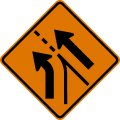
Tells drivers entering the roadway that an added lane opens on the left, so they can proceed without merging into existing traffic.
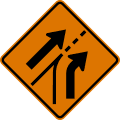
Tells drivers entering the roadway that an added lane opens on the right, allowing them to join without merging into through traffic.
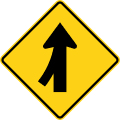
Warns of a merge from the left ahead where another lane joins yours. Watch for and accommodate merging vehicles.
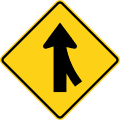
Warns of a merge from the right ahead where an entering lane joins yours. Adjust speed to blend safely with merging traffic.
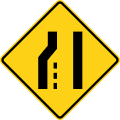
Signals that the left lane ends ahead, requiring traffic to merge to the right before the lane runs out.
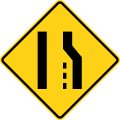
Signals that the right lane ends ahead, requiring traffic to merge to the left before the lane closes.
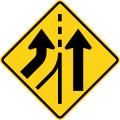
Marks an added lane beginning on the left, where a new lane opens so vehicles need not merge and can travel alongside.
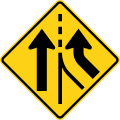
Marks an added lane beginning on the right, providing a new lane so entering traffic joins without a forced merge.
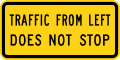
A plaque stating that traffic from the left does not stop, warning you that cross traffic entering from the left has no stop control and will not halt.
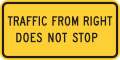
A plaque stating that traffic from the right does not stop, alerting you that vehicles entering from the right are not required to halt.
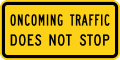
A plaque warning that oncoming traffic does not stop, used at intersections where you may stop but approaching traffic has no stop control.
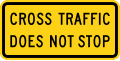
A plaque reading Cross Traffic Does Not Stop, mounted below a stop sign to warn that intersecting traffic has the right of way and will not halt.
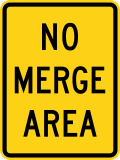
A supplemental No Merge Area plaque used with merge warnings, telling drivers there is no space provided to merge so entering vehicles must yield.
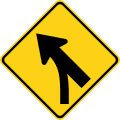
Directs entering drivers to merge left onto the main roadway, yielding to traffic already traveling on it.
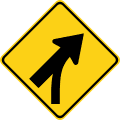
Directs entering drivers to merge right onto the main roadway, giving way to vehicles already on the through lanes.
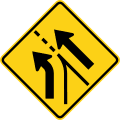
Tells drivers entering the roadway that an added lane opens on the left, so they can enter without merging into existing traffic.
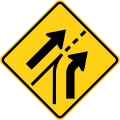
Tells drivers entering the roadway that an added lane opens on the right, allowing entry without merging into through traffic.
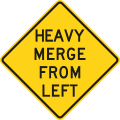
Warns of a heavy merge from the left where a high volume of traffic joins your roadway, so expect significant merging activity from that side.
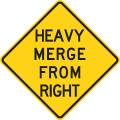
Warns of a heavy merge from the right where a large volume of traffic enters your roadway, so anticipate busy merging from that side.
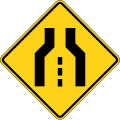
Warns of a single-lane transition ahead where the roadway narrows to one lane, so prepare for the reduced width and merging traffic.
W5 series Road width restrictions
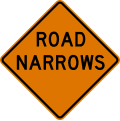
Warns that the road narrows ahead as both sides come in, reducing the available width. Slow down and keep centered in your lane.
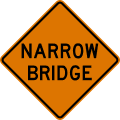
Warns of a narrow bridge ahead where the roadway width shrinks. Reduce speed and be cautious of oncoming vehicles in the tight space.
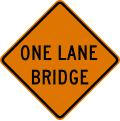
Warns of a one-lane bridge ahead that carries only one vehicle at a time. Slow down and yield to oncoming traffic already on the bridge.
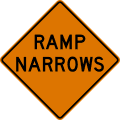
Warns that the ramp narrows ahead, reducing width along the ramp. Slow down and stay within the tightening lane.
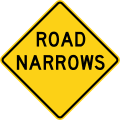
Indicates the road narrows ahead as the pavement width decreases from both sides. Reduce speed and keep to your lane.
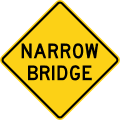
Marks a narrow bridge ahead where the crossing is only slightly wider than the roadway. Slow and watch for oncoming vehicles.
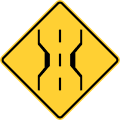
Warns of a narrow underpass ahead where clearance width is reduced. Slow down and stay centered when passing beneath the structure.
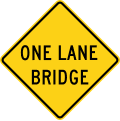
Marks a one-lane bridge ahead that only one vehicle can cross at a time. Yield to any oncoming traffic already on the bridge.
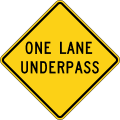
Warns of a one-lane underpass ahead where only one vehicle can pass at a time. Slow and yield to oncoming traffic in the narrow passage.
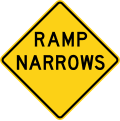
Warns that the ramp narrows ahead. Reduce speed and stay within the lane as the ramp width decreases.
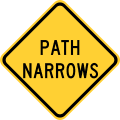
Warns that a path or trail narrows ahead, typically for shared-use paths, so pedestrians and cyclists should be cautious in the tighter section.
W6 series Divided highway
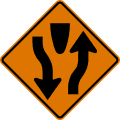
Signals that a divided highway begins ahead, where a median separates opposing traffic. Keep right and treat it as one-way in your direction.
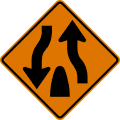
Signals that the divided highway ends ahead, where the median stops and you will meet two-way traffic. Keep right and watch for oncoming vehicles.
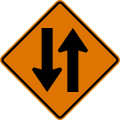
Warns of two-way traffic ahead, reminding you that opposing traffic shares the road so stay in your lane and do not expect a divided roadway.

Warns of narrow two-way traffic ahead where a tight roadway carries traffic in both directions. Slow down and stay well to your side.
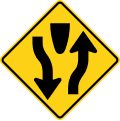
Marks the start of a divided highway, where a median or barrier separates the two directions of travel ahead. Keep to the right side.
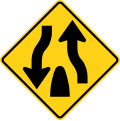
Marks the end of a divided highway ahead, where the median ends and you return to a road shared with oncoming traffic.
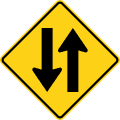
Warns of two-way traffic ahead on a road that is not divided, so expect oncoming vehicles and keep to your own lane.
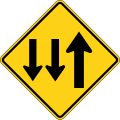
Warns of two-way traffic on a three-lane road where two lanes run in the opposing direction, so pass with extra care.
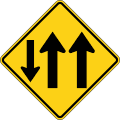
Warns of two-way traffic on a three-lane road where one lane serves the opposing direction, so watch for oncoming vehicles when using the center lane.
W7 series Hills
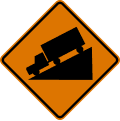
Warns of a steep grade or downhill ahead. Reduce speed, use a lower gear, and control your descent to avoid brake overheating.
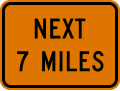
A plaque showing the distance the steep grade continues, such as Next X Miles, mounted with a hill warning to tell drivers how long the grade lasts.
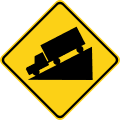
Warns of a steep hill or grade ahead. Slow down, shift to a lower gear, and be ready for a long descent.
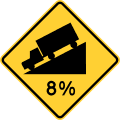
Warns of a steep grade ahead and shows the grade percentage, helping drivers, especially of trucks, judge how sharply the road descends.
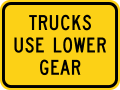
A plaque advising trucks to use a lower gear on the grade ahead, helping heavy vehicles control speed and reduce brake wear on the descent.
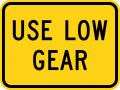
A plaque advising drivers to use low gear on the steep grade ahead, helping control speed and prevent brake overheating during the descent.
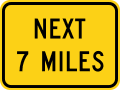
A supplemental plaque stating the distance the grade extends ahead, such as Next X Miles, so drivers know how long the steep section continues.
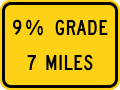
A plaque giving both the grade percentage and the distance it continues, such as a percent grade for the next several miles ahead.
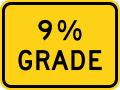
A plaque stating the percent grade of the hill ahead, mounted with a steep-grade warning so drivers know how sharp the incline or descent is.
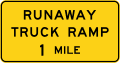
Warns of a runaway truck ramp or steep grade escape feature ahead at the stated distance, so heavy vehicles know where an emergency escape lies.
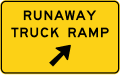
Marks a runaway truck ramp ahead, an emergency escape lane for trucks that lose braking on a steep downgrade to stop safely.
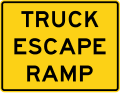
Marks a truck escape ramp ahead, providing a runaway lane where trucks with brake failure can slow and stop off the main roadway.

A plaque reading Sand, identifying the surface material of the runaway truck ramp ahead so drivers know the arrestor bed is filled with sand.

A plaque reading Gravel, indicating the runaway truck ramp ahead uses a gravel arrestor bed to slow and stop out-of-control trucks.

A plaque reading Paved, showing that the runaway truck escape ramp ahead has a paved surface rather than a loose-material arrestor bed.
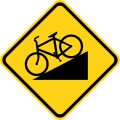
A bicycle-specific warning of a hill ahead on a bikeway, alerting riders to a steep descent so they can control speed.
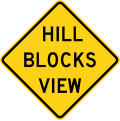
Warns that a hill or crest blocks your view of the road ahead, so slow down and be ready for hidden vehicles or hazards beyond the rise.
W8 series Pavement and roadway conditions
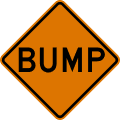
Warns of a bump in the road surface ahead. Slow down to cross it smoothly and keep control of your vehicle.
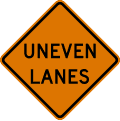
Warns that adjacent lanes sit at different heights, often from repaving. Watch for a lip between lanes and change lanes carefully to avoid catching a tire.
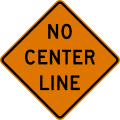
Tells drivers there is no painted center line on the road ahead. Stay right, watch for oncoming traffic, and be ready on narrow or rural stretches.
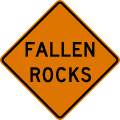
Alerts you to a stretch where rocks may fall or lie on the roadway, typically along cliffs or cut slopes. Stay alert and be ready to steer around debris.
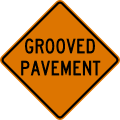
Warns of grooved pavement ahead, common near bridges or during resurfacing. The surface can feel rough and steering may wander slightly, so slow down.
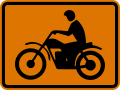
A supplemental plaque mounted with a warning sign, noting the hazard is especially dangerous for motorcyclists because of reduced traction or stability.
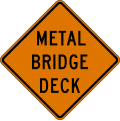
Warns of an open metal grid bridge deck ahead, which can be slick when wet and may cause tires to wander. Reduce speed and hold the wheel steady.
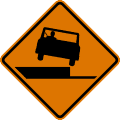
Warns that the right shoulder drops off sharply below the pavement edge. Keep to the travel lane and avoid drifting onto the low shoulder.
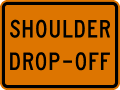
A supplemental plaque used with a shoulder warning, indicating a steep drop-off at the pavement edge where returning to the road takes extra care.
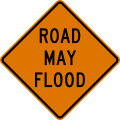
Warns that the roadway ahead is prone to flooding, especially during heavy rain. Watch for standing water and never drive into a flooded section.
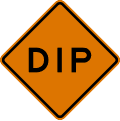
Warns of a dip or low spot in the road ahead where the surface drops suddenly. Slow down to keep control and avoid bottoming out.
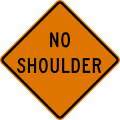
Tells drivers there is no usable shoulder on the road ahead. Do not pull off the travel lane except in an emergency.
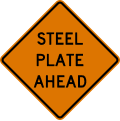
Warns of a temporary steel plate covering the roadway, often at a work zone. The plate can be slick and uneven, so slow down and cross carefully.
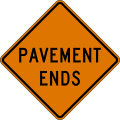
Warns that the paved surface ends ahead and the road becomes gravel or dirt. Slow down before the transition to keep traction and control.
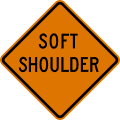
Warns that the shoulder is soft and may not support a vehicle's weight. Stay on the pavement to avoid getting stuck or losing control.
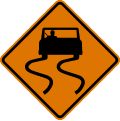
Warns that the road ahead becomes slippery when wet. Reduce speed in rain or damp conditions and avoid sudden braking or steering.
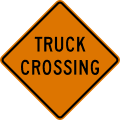
Warns of a point where trucks regularly enter or cross the roadway, such as near a plant or quarry. Watch for slow, heavy vehicles.
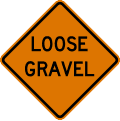
Warns of loose gravel on the road surface ahead. Slow down, increase following distance, and avoid hard braking to prevent skidding.
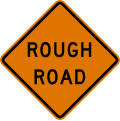
Warns that the road ahead is rough or in poor condition. Reduce speed to keep control over bumps, potholes, or broken pavement.
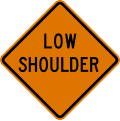
Warns that the shoulder sits lower than the travel lane. Stay on the pavement and, if a tire drops off, ease back on gently.
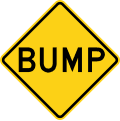
Warns of a sharp bump or raised spot in the road ahead. Slow down to keep control and reduce jolting to the vehicle.
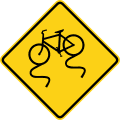
Warns bicyclists that the surface ahead becomes slippery when wet, such as painted markings or smooth pavement. Riders should slow and use caution in the rain.
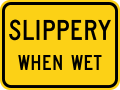
A supplemental plaque added below a warning sign to specify that the hazard applies when the road surface is wet.
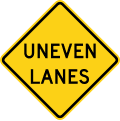
Warns that neighboring lanes are at different heights, often during resurfacing. Change lanes carefully to avoid the raised pavement edge.
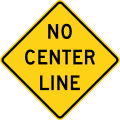
Warns that the road ahead has no painted center line. Keep right, watch oncoming traffic, and use extra care on narrow roads.
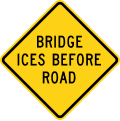
Warns that a bridge deck freezes before the surrounding roadway. Slow down in cold, damp weather where black ice can form on the bridge.
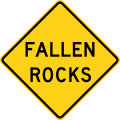
Warns of falling or fallen rocks along the road, common in mountainous or rocky terrain. Stay alert and be ready to avoid debris.
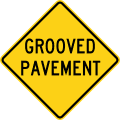
Warns of grooved pavement ahead, often before repaving or on bridges. Expect a rougher surface and slightly less positive steering, so ease off the gas.
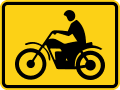
A supplemental plaque paired with a warning sign to flag that the condition ahead poses a special hazard to motorcycles.
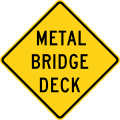
Warns of an open steel grid bridge deck ahead. The metal surface can be slippery when wet and cause tire wander, so slow and steer steadily.
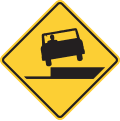
Warns that the left shoulder drops off sharply below the pavement. Keep to the travel lane and avoid drifting toward the low left edge.
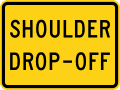
A supplemental plaque used with a shoulder warning to indicate a steep drop-off at the edge of the pavement.
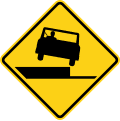
Warns that the right shoulder drops off sharply below the pavement. Stay in the travel lane and avoid letting a tire slip off the right edge.
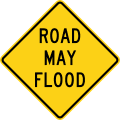
Warns that the road ahead may flood, particularly in heavy rain. Watch for standing water and turn around rather than driving through it.
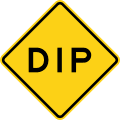
Warns of a dip in the road where the surface drops abruptly. Reduce speed to stay in control and avoid scraping the underside.
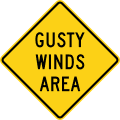
Warns that strong crosswinds are common in this area. Keep a firm grip on the wheel and watch for gusts, especially in tall or light vehicles.
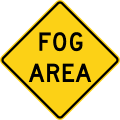
Warns that fog frequently reduces visibility in this area. Slow down, use low-beam headlights, and increase your following distance.
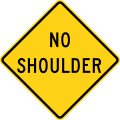
Tells drivers there is no shoulder on the road ahead. Avoid pulling off the travel lane except in a true emergency.
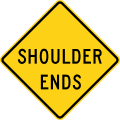
Warns that the paved shoulder ends ahead. Stay in the travel lane and do not rely on the shoulder for stopping past this point.
.svg.png&w=256&q=75)
Orange temporary version warning that the shoulder ends ahead in a work zone. Stay in the travel lane and watch for narrowed conditions.
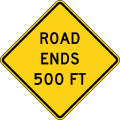
Warns that the road ends a stated distance ahead. Prepare to slow, stop, or turn where the roadway terminates.
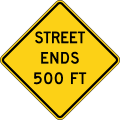
Warns that the street ends a stated distance ahead. Be ready to turn or stop where the street terminates, common in residential areas.
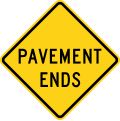
Warns that the pavement ends ahead and the surface turns to gravel or dirt. Slow down before the change to keep traction.
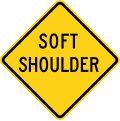
Warns that the shoulder is soft and may not hold a vehicle's weight. Keep to the pavement to avoid sinking or losing control.
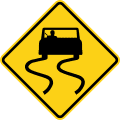
Warns that the road ahead becomes slippery when wet. Slow down in rain and avoid abrupt braking, steering, or acceleration.

A supplemental plaque reading ICE, added to a slippery-when-wet warning to indicate the surface can ice over in cold weather.
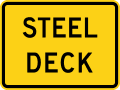
A supplemental plaque reading STEEL DECK, warning that a metal bridge deck ahead becomes especially slippery when wet.
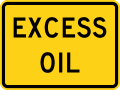
A supplemental plaque reading EXCESS OIL, warning that oil buildup on the pavement makes the surface slick, especially when it first rains.
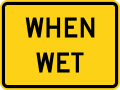
A supplemental WHEN WET plaque mounted below a slippery warning to specify the hazard occurs while the road is wet.
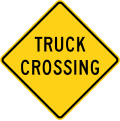
Warns of a point where trucks frequently enter or cross the road, such as near an industrial site. Watch for slow-moving heavy vehicles.
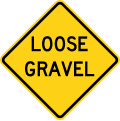
Warns of loose gravel on the roadway ahead. Slow down, keep extra following distance, and brake gently to avoid skidding.
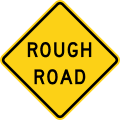
Warns that the road ahead is rough with bumps, potholes, or broken pavement. Reduce speed to stay in control.
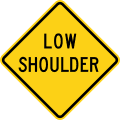
Warns that the shoulder is lower than the travel lane. Stay on the pavement and ease back gradually if a wheel drops off.
W9 series Lane transitions
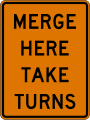
Marks a merge point where two streams of traffic must take turns joining, like a zipper. Alternate with the other lane and merge smoothly.
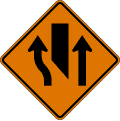
Warns that the traffic lane shifts to the left ahead, often in a work zone. Follow the realigned lane and stay within the markings.
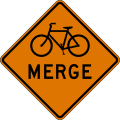
Warns drivers that bicyclists merge into or across the roadway ahead. Watch for riders joining traffic and share the lane safely.
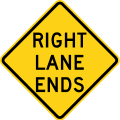
Warns that the right lane ends ahead and traffic must merge left. Adjust speed and move over safely before the lane closes.
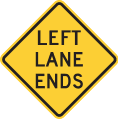
Warns that the left lane ends ahead and traffic must merge right. Signal and move over before the left lane disappears.
.svg.png&w=256&q=75)
Orange temporary sign warning that the right lane ends ahead in a work zone. Merge left in turn before the lane closes.
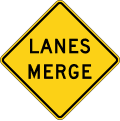
Warns that two lanes merge into one ahead and drivers must take turns. Adjust speed and blend together smoothly.
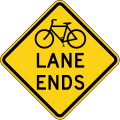
Warns that the bicycle lane ends ahead. Bicyclists should prepare to merge with traffic and drivers should watch for them.
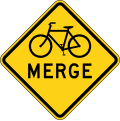
Alerts drivers that bicyclists are merging into the travel lane ahead. Slow if needed and give riders room to join safely.
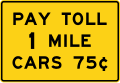
Advises the distance ahead to a toll plaza and the fare for cars. Prepare to slow, select a lane, and have payment ready.
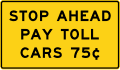
Warns that traffic must stop ahead to pay a toll, listing the car fare. Slow down and get your payment ready before the booth.

A supplemental plaque stating the distance to a toll plaza and the car fare, mounted below a related toll warning sign.

A supplemental plaque noting that a stop is required ahead to pay a toll, used with a toll warning sign.

A supplemental plaque advising that vehicles must stop ahead to pay a toll, mounted with a related toll sign.
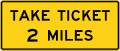
Advises the distance ahead to a toll booth where drivers must take a ticket. Prepare to slow and grab your ticket at the plaza.
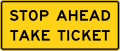
Warns that traffic must stop ahead at a toll plaza to take a ticket. Slow down and be ready to pull a ticket.

A supplemental plaque giving the distance to a toll plaza where a ticket must be taken, mounted below a related sign.

A supplemental plaque advising that vehicles must stop ahead to take a toll ticket, used with a related warning sign.
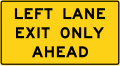
Warns that the left lane becomes exit-only ahead. If you want to continue straight, move out of the left lane in time.
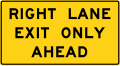
Warns that the right lane becomes exit-only ahead. Move left if you intend to stay on the roadway rather than exit.
W10 series Railroad crossings
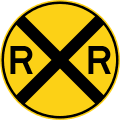
The round railroad advance-warning sign telling drivers a highway-rail crossing lies ahead. Slow down, look, and be ready to stop for a train.
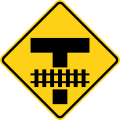
A storage-space symbol sign showing how much room is available between the tracks and a nearby intersection, so drivers avoid stopping on the rails.
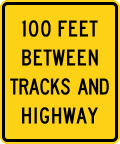
States the number of feet between the railroad tracks and the highway ahead, helping drivers judge whether their vehicle will clear the crossing.
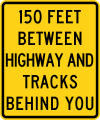
States the feet between the highway and the tracks behind you, warning long vehicles not to stop where they could block the crossing.
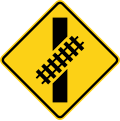
Supplements the round crossing sign by showing that the tracks cross the road at a skewed angle. Watch for the angled crossing ahead.
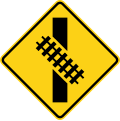
Supplements the round crossing sign by depicting tracks meeting the road at a skewed angle from the other side. Expect an angled crossing ahead.
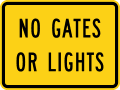
A supplemental plaque warning that the railroad crossing ahead has no gates or flashing lights. Slow, look both ways, and yield to trains.
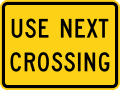
A supplemental plaque directing drivers to use the next railroad crossing instead of this one, often for low-clearance or blocked crossings.
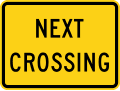
A supplemental plaque pointing drivers toward the next railroad crossing, used where this crossing should be avoided.
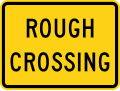
A supplemental plaque warning that the railroad crossing surface ahead is rough. Slow down to cross the uneven tracks safely.
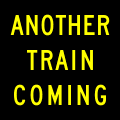
An activated blank-out sign that lights up to warn that another train is approaching. Do not cross until it clears and it is safe.

An EXEMPT plaque indicating that certain vehicles, such as buses and trucks with hazardous loads, are not required to stop at this railroad crossing.
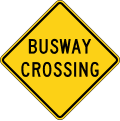
Warns of a busway crossing ahead where buses travel on a dedicated lane. Slow down and watch for crossing transit buses.
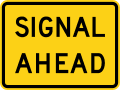
A supplemental SIGNAL AHEAD plaque warning of a traffic signal at the crossing ahead, used with a busway or transit crossing sign.
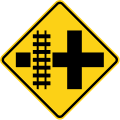
Warns of an intersection just ahead where a highway with parallel railroad tracks crosses, with the tracks on the left. Watch for trains and turning traffic.
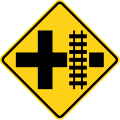
Warns of a crossroad ahead running alongside railroad tracks on the right. Be alert for trains and vehicles at the intersection.
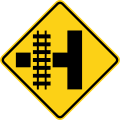
Warns that a side road joins from the left near railroad tracks that run parallel to it. Watch for turning traffic and approaching trains.
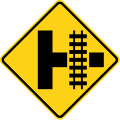
Warns that a side road joins from the right alongside parallel railroad tracks. Be alert for trains and vehicles entering from that road.
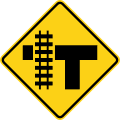
Warns of a T-intersection ahead with railroad tracks running parallel on the left. Prepare to turn and watch for trains near the crossing.
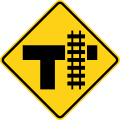
Warns of a T-intersection ahead with railroad tracks running parallel on the right. Slow down, prepare to turn, and watch for trains.
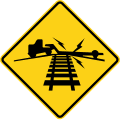
Warns of a low ground clearance railroad crossing where the humped tracks can hang up a long or low vehicle. Trucks and trailers should avoid crossing.
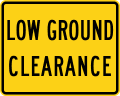
A supplemental plaque marking a low ground clearance crossing, alerting drivers of long, low vehicles that they could get stuck on the tracks.
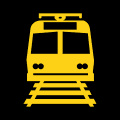
An activated blank-out sign that lights up when a light rail train is approaching the crossing. Wait until it is clear before proceeding.
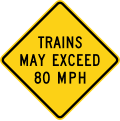
Warns that trains may exceed a posted speed, meaning they arrive faster than they look. Never try to beat a train to the crossing.
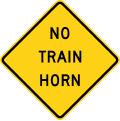
Warns that train horns are not sounded at the crossings ahead, common in quiet zones. Rely on your own alertness and the crossing signals.
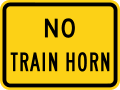
A supplemental NO TRAIN HORN plaque indicating trains do not sound their horns here. Watch and listen carefully before crossing the tracks.
W11 series Advance warnings
.svg.png&w=256&q=75)
Orange temporary pedestrian warning sign marking a spot where people may be crossing, such as a work zone. Slow down and be ready to stop.
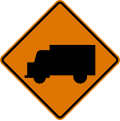
Warns of a location where trucks frequently enter or cross the road. Watch for large, slow-moving vehicles and give them room.
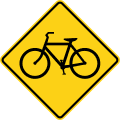
The bicycle warning sign, alerting drivers that bicyclists may be on or crossing the roadway ahead. Slow down and share the road safely.
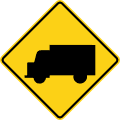
Warns of a point where trucks regularly enter or cross the roadway. Be alert for heavy vehicles moving slowly onto the road.
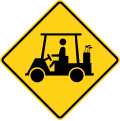
Warns that golf carts may be on or crossing the road ahead. Slow down and watch for these slow, low-speed vehicles.
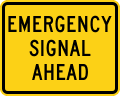
A supplemental plaque warning of an emergency-vehicle signal ahead, such as at a fire station. Be ready to stop when it activates.
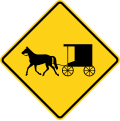
Warns that horse-drawn vehicles such as Amish buggies may share or cross the road ahead. Slow down and be ready for very slow-moving traffic.
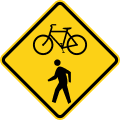
Marks a shared-use trail crossing where both pedestrians and bicyclists cross the roadway. Watch for people on foot and on bikes.
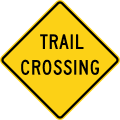
An alternate trail crossing warning showing walkers and cyclists using a shared path that intersects the road ahead. Yield to trail users.
.svg.png&w=256&q=75)
The bright fluorescent yellow-green trail crossing sign, alerting drivers to a busy shared-use path where pedestrians and cyclists cross.
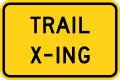
A supplemental TRAIL plaque mounted below a crossing symbol to identify the crossing point as a designated shared-use trail.
.svg.png&w=256&q=75)
The fluorescent yellow-green TRAIL crossing plaque, used under a crossing sign to flag a shared path where walkers and cyclists cross.
.svg.png&w=256&q=75)
Fluorescent yellow-green warning for a shared-use trail crossing, giving drivers extra visibility of pedestrians and cyclists ahead.
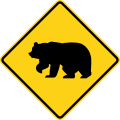
Alerts drivers that bears may cross the road in this area. Reduce speed, especially at dawn, dusk, and night when wildlife is active.
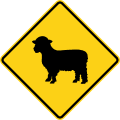
Warns of sheep that may be herded across or along the roadway ahead. Slow down and be prepared to stop for livestock.
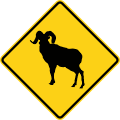
Cautions drivers about bighorn sheep or rams in the area that may enter the roadway. Watch for animals on mountain and rural roads.
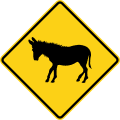
Warns that donkeys or wild burros may be on or crossing the road ahead. Slow down and give the animals room.
.svg.png&w=256&q=75)
Fluorescent yellow-green bicycle crossing sign, warning drivers that cyclists may cross the roadway at the point ahead.
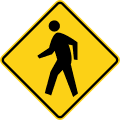
Marks a pedestrian crossing ahead. Slow down, watch for people on foot, and be ready to yield at the crosswalk.
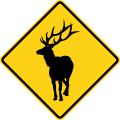
Warns of elk crossing the road in this area. These large animals are a serious collision hazard, so reduce speed and stay alert.
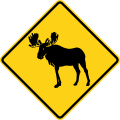
Cautions drivers that moose may cross the roadway. Their size and height make crashes especially dangerous, so slow down and watch the shoulders.
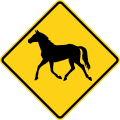
Alerts drivers to wild horses that may enter or cross the road ahead. Reduce speed and be ready to stop in open-range areas.
.svg.png&w=256&q=75)
Fluorescent yellow-green pedestrian crossing sign, giving high visibility warning that people may be crossing ahead.
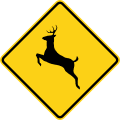
Warns of deer crossing the road in this area. Deer are unpredictable, so slow down and scan the roadsides, especially at dawn and dusk.
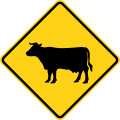
Cautions drivers that cattle may be crossing or grazing near the road. Be prepared for livestock on open-range and farm routes.
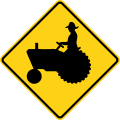
Warns that slow-moving farm machinery and tractors may be entering or crossing the road ahead. Reduce speed and pass with care.
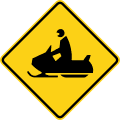
Alerts drivers to a snowmobile crossing ahead, where snowmobiles may cross the roadway on marked trails in winter recreation areas.
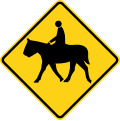
Marks an equestrian crossing where horseback riders may cross the road. Slow down, avoid sudden noise, and give horses plenty of space.
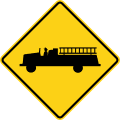
Warns of emergency vehicles such as fire trucks entering the roadway from a station ahead. Be ready to yield to responding vehicles.
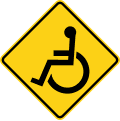
Marks a crossing used by people with disabilities, including wheelchair users. Slow down and yield to anyone crossing here.
.svg.png&w=256&q=75)
Fluorescent yellow-green sign warning of a crossing for people with disabilities and wheelchair users, giving drivers extra visibility.
W12 series Low clearance warnings
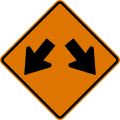
A double-arrow warning that the road ahead is split by an obstruction or median that may be passed on either side. Keep right or left as needed.
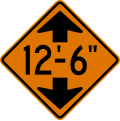
Warns of a low overhead structure ahead and posts the maximum vertical clearance. Tall trucks must confirm their height will fit.
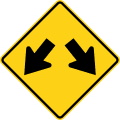
The double-arrow sign marks an obstruction, island, or divider in the road that drivers may pass on either the left or right side.
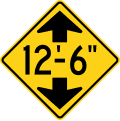
Low clearance warning giving the height of an overpass, bridge, or tunnel ahead. Drivers of tall vehicles must ensure they can clear it.

An overhead-mounted low clearance sign posted directly on a bridge or structure, showing the exact height limit for vehicles passing beneath.
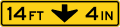
Another overhead low clearance sign fixed to the structure itself, marking the maximum height so tall trucks avoid striking it.
W13 series Advisory speeds
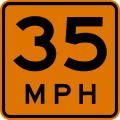
An advisory speed plaque showing the safe speed, in mph, for a curve or condition warned by the sign above it. Not a legal speed limit.
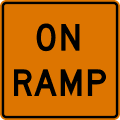
A supplemental plaque indicating the advisory applies to an on-ramp, showing the recommended safe speed for entering the highway.
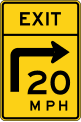
Combines an exit sign with a turn arrow and advisory speed, showing the safe speed for a sharp turn on the exit ramp ahead.
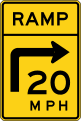
Shows the advisory speed for a sharp turn on a ramp, pairing a turn arrow with the recommended safe speed in mph.
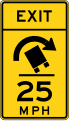
Warns of truck rollover risk on an exit ramp and posts a reduced advisory speed. High-profile vehicles should slow well before the curve.
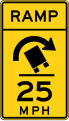
Alerts truck drivers to rollover danger on a ramp curve ahead, with an advisory speed low enough to keep tall vehicles stable.
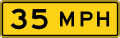
A confirmation advisory speed plaque, repeating the recommended safe speed for the curve or ramp after drivers have entered it.
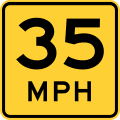
The standard advisory speed plaque mounted below a curve or turn sign, recommending the safe speed to drive through the condition ahead.
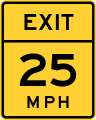
An exit speed sign showing a curve diagram and the advisory speed for safely traveling the freeway exit ramp ahead.
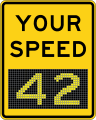
A variable speed feedback sign that displays the recommended advisory speed, often reacting to conditions or a driver's actual speed.
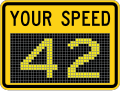
A supplemental plaque used with the variable speed feedback sign, reinforcing the advisory speed message for approaching drivers.
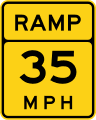
A ramp speed sign showing the curve of the ramp and the advisory speed for safely navigating it as you leave or join a highway.
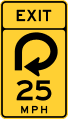
Marks an exit ramp with a tight 270-degree loop and posts the low advisory speed needed to travel the full circular ramp safely.
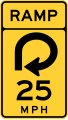
Warns of a 270-degree loop ramp and shows the advisory speed for safely driving the sharp circular curve ahead.
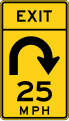
Marks an exit ramp with a hairpin curve that doubles back sharply, posting a very low advisory speed for the turn.
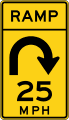
Warns of a hairpin curve on a ramp and shows the reduced advisory speed needed to safely make the sharp reversing turn.
W14 series Dead end streets and no passing zones
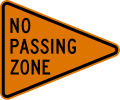
The pennant-shaped no-passing-zone sign, posted on the left side to tell drivers they may not pass other vehicles through this stretch.
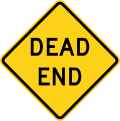
Warns that the road ahead ends with no way through. Drivers must turn around, as the street terminates in a dead end.

Indicates a dead end on the road to the left, warning that the left-hand route has no through connection.

Indicates a dead end on the road to the right, warning that the right-hand route ends with no way through.
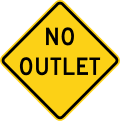
Warns that the road ahead has no outlet and does not connect to another route. Vehicles must return the way they came.

Signals that the road to the left is a no-outlet route with no through connection, requiring drivers to turn back.

Signals that the road to the right has no outlet, warning drivers that the right-hand route does not lead through.
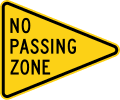
The pennant-shaped NO PASSING ZONE sign on the left side of the road, marking the start of an area where passing is prohibited.
W15 series Playgrounds
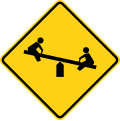
Warns of a playground nearby where children may be present. Slow down and stay alert for kids entering the roadway.
.svg.png&w=256&q=75)
Fluorescent yellow-green playground sign giving high-visibility warning that children may be playing and could enter the street ahead.
W16 series Supplemental plaques
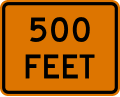
A distance plaque reading the number of feet to the hazard warned above, telling drivers how far ahead the condition lies.
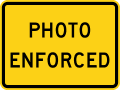
A PHOTO ENFORCED word plaque, notifying drivers that the traffic condition or violation ahead is monitored by automated cameras.

A photo-enforced symbol plaque with a camera icon, warning that the location ahead is monitored by automated enforcement cameras.

An HOV plaque indicating the warning above applies to the high-occupancy-vehicle lane or facility.

A roundabout plaque with a circular junction symbol, used below a warning sign to identify an approaching roundabout.
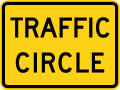
A traffic circle plaque showing a circular-junction symbol, mounted under a warning sign to indicate a traffic circle ahead.
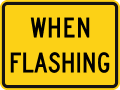
A WHEN FLASHING plaque telling drivers the warning above applies only while its beacon lights are active.

A NEW plaque added below a sign to draw attention to a recently installed or newly changed traffic condition.
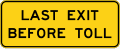
A two-line LAST EXIT BEFORE TOLL plaque, warning drivers that the upcoming exit is the final chance to leave before a toll.

A single-line LAST EXIT BEFORE TOLL plaque, notifying drivers that the next exit is the last one before toll charges apply.

A TOLL plaque mounted below a sign to indicate that the route or facility ahead requires payment of a toll.
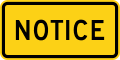
A NOTICE plaque used below a warning sign to call attention to an important supplemental message for drivers.
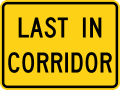
A LAST IN CORRIDOR plaque, informing drivers that this is the final service, exit, or facility of its kind along the corridor.
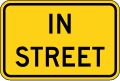
An IN STREET plaque used with a pedestrian crossing sign placed in the roadway, reminding drivers to yield to people in the crosswalk.
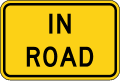
An IN ROAD plaque paired with a crossing sign mounted in the roadway, reinforcing that drivers must yield to pedestrians crossing here.
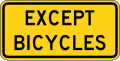
An EXCEPT BICYCLES plaque, clarifying that the restriction or warning above does not apply to bicyclists.
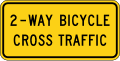
A plaque warning of two-way bicycle cross traffic, alerting drivers that cyclists may approach the crossing from both directions.
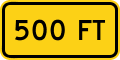
A distance plaque stating how many feet ahead the warned hazard is located, helping drivers judge when to react.
.svg.png&w=256&q=75)
The fluorescent yellow-green distance plaque showing the feet to a pedestrian or bicycle hazard, for high-visibility crossings.
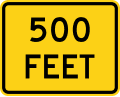
A supplemental plaque giving the distance in feet to the condition warned by the sign above it.
.svg.png&w=256&q=75)
A fluorescent yellow-green feet-distance plaque, used under pedestrian or trail crossing signs for added visibility.

A distance plaque expressing how many miles ahead the warned condition lies, so drivers can anticipate it in advance.
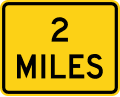
A supplemental plaque showing the distance in miles to the hazard or feature warned by the sign above.
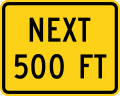
A NEXT (distance) FEET plaque, telling drivers the warned condition continues for the stated number of feet ahead.
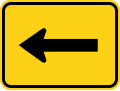
A supplemental horizontal arrow plaque pointing left, directing attention toward the location of the hazard on the left.
.svg.png&w=256&q=75)
The fluorescent yellow-green left-pointing supplemental arrow plaque, marking a crossing or hazard located to the left.
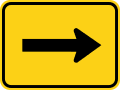
A supplemental horizontal arrow plaque pointing right, indicating the warned condition is located to the right.
.svg.png&w=256&q=75)
The fluorescent yellow-green right-pointing supplemental arrow plaque, directing drivers toward a crossing or hazard on the right.
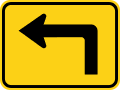
A supplemental arrow plaque pointing left, used below a warning sign to show the hazard lies in that direction.
.svg.png&w=256&q=75)
A fluorescent yellow-green left-pointing arrow plaque, highlighting the direction of a pedestrian or bicycle crossing.
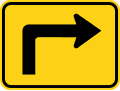
A supplemental arrow plaque pointing right, indicating the warned crossing or condition is off to the right.
.svg.png&w=256&q=75)
A fluorescent yellow-green right-pointing arrow plaque, drawing attention to a crossing or hazard located to the right.
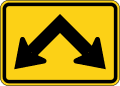
A dual downward diagonal arrow plaque with arrows angled to both sides, marking the exact location of a crosswalk beneath the sign.

A downward diagonal arrow plaque angled to the left, pinpointing a crossing point just to the left of the sign.
.svg.png&w=256&q=75)
The fluorescent yellow-green downward diagonal arrow pointing left, marking the exact spot of a crossing on the left.

A downward diagonal arrow plaque angled to the right, marking the crossing location just to the right of the sign.
.svg.png&w=256&q=75)
The fluorescent yellow-green downward diagonal arrow pointing right, pinpointing a crossing location on the right.
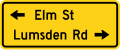
An advance street name plaque with a double arrow, naming an upcoming cross street that drivers can reach in either direction.

An advance street name plaque naming the cross street ahead, giving drivers time to prepare for the intersection.
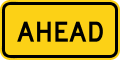
An AHEAD plaque used below a warning sign to indicate the warned condition lies directly ahead on the roadway.
.svg.png&w=256&q=75)
The fluorescent yellow-green AHEAD plaque, signaling that a pedestrian or bicycle crossing lies just ahead.
W17 series Speed humps
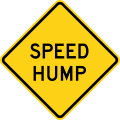
Warns of a speed hump in the road ahead, a raised section built to slow traffic. Reduce speed to cross it smoothly.
W18 series No traffic signs
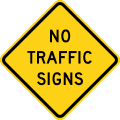
Advises that there are no traffic control signs on the road ahead, so drivers must proceed with added caution at intersections.
W19 series Freeway or expressway end signs

Warns that the freeway ends within the posted distance, where drivers will leave the controlled-access highway for a regular road.

Warns that the expressway ends within the stated distance, alerting drivers to prepare for cross traffic and slower roads ahead.
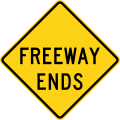
Signals that the freeway ends just ahead. Be ready for at-grade intersections, traffic signals, and reduced speeds.
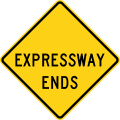
Signals that the expressway ends ahead, warning drivers to expect cross streets, signals, and slower traffic conditions.
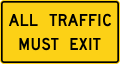
Warns that the freeway or expressway is ending ahead and every vehicle must leave the road at the upcoming exit, with no through route continuing.
W20 series Work zones
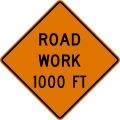
Alerts drivers that road construction or maintenance work begins the posted distance ahead, so slow down and be ready for workers, equipment, and lane changes.
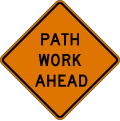
Warns that work is taking place on a shared-use path or trail ahead, telling cyclists and pedestrians to expect crews and possible detours.
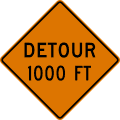
Tells drivers a detour begins the stated distance ahead because the normal route is closed or restricted by a work zone; follow the marked alternate path.
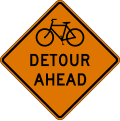
Notifies cyclists that a bicycle detour lies ahead, since the usual bike route is blocked by construction; prepare to follow the signed alternate route.
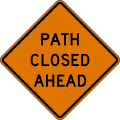
Warns that a shared-use path or trail is completely closed the posted distance ahead, so cyclists and walkers should plan another way.
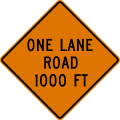
Indicates the roadway narrows to a single shared lane ahead, where opposing traffic must take turns, often controlled by flaggers or signals.
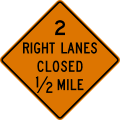
Warns that the two right-hand lanes close ahead in a work zone; merge left in good time to keep traffic flowing safely.
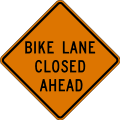
Alerts cyclists that the bike lane is closed ahead for work, so they must merge with traffic or use another route until it reopens.
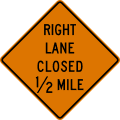
Warns that the right lane closes the posted distance ahead because of road work; move safely into the open lane before reaching the closure.
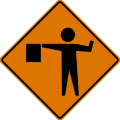
Symbol sign showing a flagger, warning that a person will be directing traffic ahead in the work zone; slow down and obey their signals.
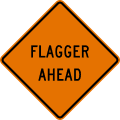
Text version of the flagger warning, telling drivers a traffic controller is stationed ahead in the work zone and their hand signals must be obeyed.
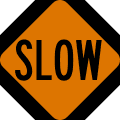
The SLOW side of a flagger's hand paddle, ordering drivers to reduce speed and proceed with caution past the work zone.
.svg.png&w=256&q=75)
Warns that the road is fully closed ahead due to construction; drivers must prepare to stop or follow a posted detour before reaching the closure.

The STOP side of a flagger's hand paddle, requiring drivers to come to a complete halt and wait until directed to move through the work zone.
W21 series Road work
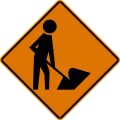
Symbol sign warning that workers are present on or near the road ahead; slow down, stay alert, and be ready to change lanes.
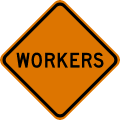
Text sign warning that road crews are working ahead, reminding drivers to reduce speed and watch carefully for people on the roadway.
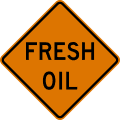
Warns that the pavement ahead has been treated with fresh oil or tar, which can be slippery and may splash onto vehicles; slow down.
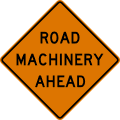
Alerts drivers that road machinery is operating the posted distance ahead, so expect slow or stopped equipment entering and crossing the roadway.
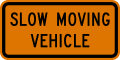
Warns of a slow-moving vehicle operating ahead in the work area, telling drivers to be ready to reduce speed and pass with care.
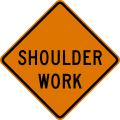
Indicates crews are working on the shoulder ahead; stay in your lane, slow down, and give the workers room as you pass.
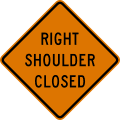
Warns that the right shoulder is closed ahead, so it cannot be used for stopping or as a refuge; keep moving in the travel lanes.
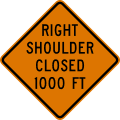
Advises that the right shoulder closes the stated distance ahead, giving drivers advance notice not to rely on it for stopping or emergencies.
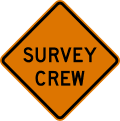
Warns that a survey crew is working on or beside the road ahead; slow down and watch for people near the travel lanes.
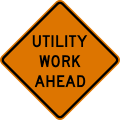
Alerts drivers that utility crews are working the posted distance ahead, so expect equipment, workers, and possible lane restrictions near the roadside.
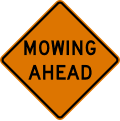
Warns that mowing operations are underway the stated distance ahead, so watch for slow equipment and workers along the shoulder or median.
W22 series Blasting zones
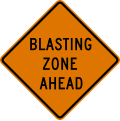
Warns that a blasting zone begins the posted distance ahead; follow instructions to turn off two-way radios and mobile transmitters that could trigger charges.
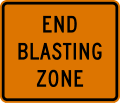
Marks the end of the blasting zone, telling drivers they may safely resume normal use of radios and mobile transmitters.
W23 series Slow traffic
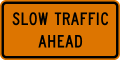
Warns that traffic ahead is moving slowly, so be prepared to reduce speed and avoid a sudden closing on the vehicles in front.
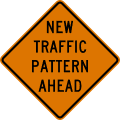
Alerts drivers to a new or changed traffic pattern ahead, so pay close attention to lanes and signs that differ from the usual layout.
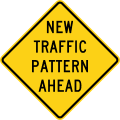
Warns that the roadway ahead follows a new traffic pattern, urging drivers to stay alert for unfamiliar lane arrangements and updated signing.
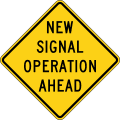
Notifies drivers that a signalized intersection ahead now operates differently, so watch for changes in how the traffic lights control movements.
W24 series Lane shifts
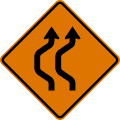
Warns of a two-lane reverse curve or lane shift that first veers left then back, guiding drivers to steer smoothly through the double bend.
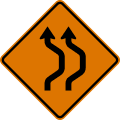
Warns of a two-lane reverse curve or lane shift that first veers right then back, telling drivers to follow the double bend at a safe speed.
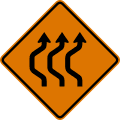
Warns of a three-lane reverse curve or lane shift beginning to the left, alerting drivers to a double bend across three lanes of traffic.
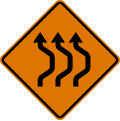
Warns of a three-lane reverse curve or lane shift beginning to the right, alerting drivers to a double bend across three lanes of traffic.
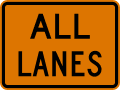
An ALL LANES plaque mounted under a lane-shift warning, confirming that the upcoming reverse curve or shift affects every lane of the roadway.
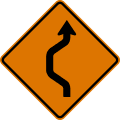
Warns of a single-lane reverse curve or lane shift that swings left then back, guiding drivers smoothly through the double bend ahead.
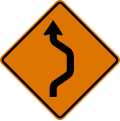
Warns of a single-lane reverse curve or lane shift that swings right then back, guiding drivers smoothly through the double bend ahead.
W25 series Oncoming traffic has extended green
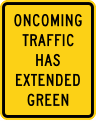
Warns at a signal that oncoming traffic keeps a green light longer than yours, so do not assume the way is clear when turning across it.
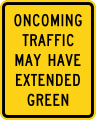
Cautions that oncoming traffic may hold an extended green, so left-turning drivers must yield and never assume the opposing signal has turned red.
W26 series Watch for stopped traffic
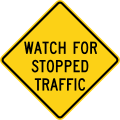
Warns drivers to watch for stopped or queued traffic ahead, often where backups form suddenly, so be ready to slow or halt.
Object markers

An object marker with a striped diamond pattern used to mark an obstruction within or next to the roadway that drivers must steer around.

An object marker of reflective yellow dots arranged in a diamond, marking a roadside or in-road obstacle so it is visible at night.

A yellow object marker highlighting a hazard within or beside the road, warning drivers to keep clear of the obstruction it flags.

A horizontally striped object marker used to flag a low obstruction such as a culvert headwall at the edge of the roadway.

A vertically striped object marker used to flag a roadside obstruction like a culvert end, warning drivers to steer clear of it.

A reflective horizontal object marker marking a culvert or similar low hazard beside the road so it stands out to approaching drivers.

A reflective vertical object marker identifying a culvert end or roadside obstacle, helping drivers judge its position and avoid it at night.

A center object marker with diagonal stripes marking an obstruction directly in the path of traffic that may be passed on either side.

A left-facing object marker whose stripes slope down to the left, directing drivers to keep left of the obstruction it marks.

A right-facing object marker whose stripes slope down to the right, directing drivers to keep right of the obstruction it marks.

An end-of-road marker warning that the roadway terminates ahead with no through route, so drivers must slow and prepare to turn or stop.

An end-of-roadway marker placed where the road stops, alerting drivers that there is no continuing path and they must not proceed straight.

A reflective end-of-road marker signaling that the traveled way ends ahead, warning drivers to reduce speed and avoid running off the road.

Have a question? Contact Us
Have questions about preparing for your DMV exam or need assistance with our tools? Reach out to us — we're here to help you succeed on your journey to getting your license

Send us a message
By sending this message, you agree to our terms and conditions.