U.S. Road Signs: Regulatory signs 2026
R1 series Stop and yield
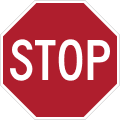
The red octagonal STOP sign requires you to come to a complete halt at the marked line, crosswalk, or intersection edge, then proceed only when the way is clear.
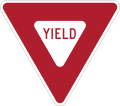
The downward red-and-white triangular YIELD sign tells you to slow down, give the right-of-way to crossing traffic and pedestrians, and stop if necessary before merging.
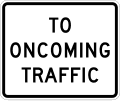
A small plaque mounted below a YIELD sign, reading TO ONCOMING TRAFFIC, clarifying that you must give way to vehicles already approaching from the opposite direction.
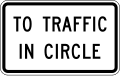
Placed under a YIELD sign at a roundabout, this TO TRAFFIC IN CIRCLE plaque reminds entering drivers to give the right-of-way to vehicles already circulating.
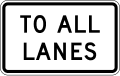
This TO ALL LANES plaque sits beneath a YIELD sign, indicating that you must give way to traffic in every lane before proceeding.

The ALL WAY plaque mounted under a STOP sign warns that every approach to the intersection must stop, so no cross traffic has an uninterrupted right-of-way.
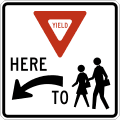
Posted before a school crosswalk, this sign with a left-pointing arrow marks the exact spot where drivers must yield to children crossing on the left.
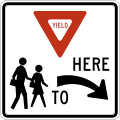
Placed ahead of a school crosswalk, this sign with a right-pointing arrow shows where you must yield to students crossing to the right.
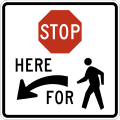
This STOP HERE FOR PEDESTRIANS sign with a left arrow marks the point where drivers must stop for people using the crosswalk on the left.
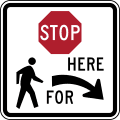
This STOP HERE FOR PEDESTRIANS sign with a right arrow shows the stopping point for drivers to let people cross on the right.
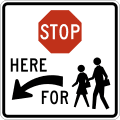
At a school crossing, this sign with a left arrow tells drivers exactly where to stop so students can cross safely on the left.
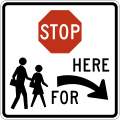
At a school crossing, this sign with a right arrow marks where drivers must stop to allow students to cross on the right.
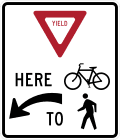
Found where a shared-use path meets the road, this left-arrow sign marks the spot to yield to trail users crossing from the left.
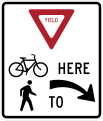
Where a trail crosses the roadway, this right-arrow sign shows drivers where to yield to path users crossing on the right.
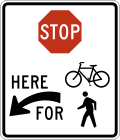
This STOP HERE FOR trail-crossing sign with a left arrow marks the point where drivers must stop for people using the path on the left.
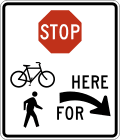
This STOP HERE FOR trail-crossing sign with a right arrow shows where drivers must stop for path users crossing on the right.
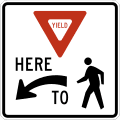
Set back from a crosswalk, this YIELD HERE TO PEDESTRIANS sign with a left arrow marks where drivers must give way to people crossing on the left.
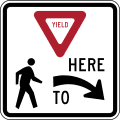
Set back from a crosswalk, this YIELD HERE TO PEDESTRIANS sign with a right arrow shows where drivers must give way to people crossing on the right.
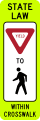
An in-street sign placed at the crosswalk telling drivers that state law requires them to yield to pedestrians within the marked crossing.
.svg.png&w=256&q=75)
The yellow-background version of the in-street crossing sign, mounted in the roadway to remind drivers to yield to pedestrians in the crosswalk.
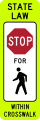
A taller in-street pedestrian crossing sign posted at the crosswalk, reminding drivers that state law requires yielding to people crossing.
.svg.png&w=256&q=75)
The yellow-background variant of the taller in-street pedestrian crossing sign, standing in the road to prompt drivers to yield at the crosswalk.
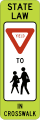
A fluorescent yellow-green in-street sign at a school crosswalk, directing drivers to stop or yield for children crossing.
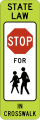
A taller fluorescent yellow-green in-street school crossing sign placed in the roadway to make drivers yield to students in the crosswalk.
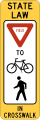
An in-street sign marking a trail or shared-use path crossing, telling drivers to yield to path users in the crosswalk.
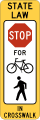
A taller in-street trail crossing sign standing in the roadway to remind drivers to yield to people using the shared-use path.
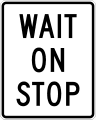
A gate-mounted STOP sign used at controlled crossings, instructing drivers to wait while the STOP face is displayed before proceeding.
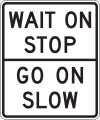
A combined signal-gate sign showing STOP on one side and SLOW on the other, telling drivers to wait when stopped and proceed cautiously when slow is shown.
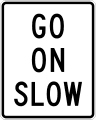
A SLOW paddle or gate sign directing drivers to reduce speed and proceed with caution rather than stopping fully.
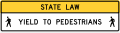
An overhead-mounted pedestrian crossing sign spanning the road to alert drivers, above the traffic lanes, that people may be crossing.
.svg.png&w=256&q=75)
The fluorescent yellow-green overhead pedestrian crossing sign, hung above the roadway for high visibility where people cross.
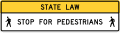
A wider overhead pedestrian crossing sign mounted above the lanes to warn drivers of a marked crossing ahead.
.svg.png&w=256&q=75)
The fluorescent yellow-green version of the wide overhead pedestrian crossing sign, suspended over the road for maximum visibility.
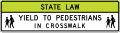
An overhead crossing sign variant mounted above the travel lanes, alerting drivers to yield or stop for pedestrians in the crosswalk.
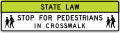
Another overhead pedestrian crossing sign variant hung above the roadway to direct drivers to give way to people crossing.
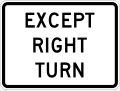
This EXCEPT RIGHT TURN plaque sits below a STOP or YIELD sign, exempting drivers making a right turn from the main sign's requirement.
R2 series Speed limit
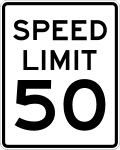
The white rectangular SPEED LIMIT sign posts the maximum legal speed for that stretch of road under normal, ideal conditions.
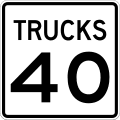
A plaque showing a separate, usually lower, maximum speed that applies specifically to trucks on that section of road.
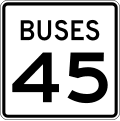
A plaque posting a distinct speed limit that applies to buses, mounted with the main speed limit sign.
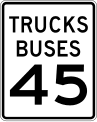
A plaque setting a combined speed limit for both trucks and buses, shown alongside the general speed limit.
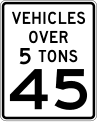
A plaque posting the maximum speed for heavy vehicles weighing over five tons on that roadway.
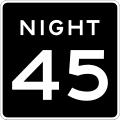
A NIGHT speed limit sign giving the maximum speed that applies specifically during nighttime hours.
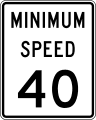
A MINIMUM SPEED LIMIT sign requiring vehicles to travel at least the posted speed to keep traffic flowing safely.
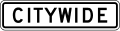
A CITYWIDE plaque under a speed limit sign, indicating the posted limit applies throughout the city unless otherwise signed.
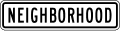
A NEIGHBORHOOD plaque paired with a speed limit sign, showing the limit applies across the surrounding residential area.
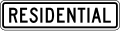
A RESIDENTIAL plaque below a speed limit sign, indicating the posted speed applies within the residential district.
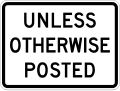
An UNLESS OTHERWISE POSTED plaque clarifying that the stated speed limit applies except where a different limit is signed.
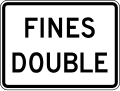
A FINES DOUBLE plaque warning that traffic penalties are doubled in this zone, often near work or safety areas.
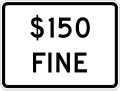
A plaque stating a specific dollar fine for speeding in this zone, mounted below the speed limit sign.
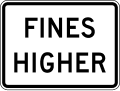
A FINES HIGHER plaque alerting drivers that increased penalties apply for violations in this posted zone.
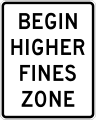
This sign marks the start of a zone where traffic fines are higher or doubled, so extra caution is required from here on.
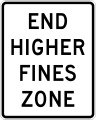
This sign marks the end of the higher- or double-fines zone, returning penalties to their normal levels.
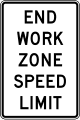
Posted where a work zone ends, this sign lifts the temporary reduced speed limit and returns drivers to the normal posted speed.
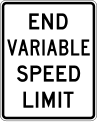
This sign indicates the end of a variable speed limit section, where speeds are no longer adjusted by electronic message signs.
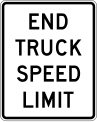
This sign marks the end of a special truck speed limit, after which trucks return to the standard posted speed.
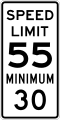
A combined sign posting both a maximum speed of 55 and a minimum of 30, so drivers must stay between the two limits.
R3 series Lane usage and turns
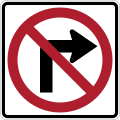
A red circle-and-slash over a right-turn arrow forbids turning right at that intersection or driveway.
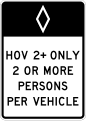
A post-mounted sign reserving the lane for high-occupancy vehicles carrying two or more people, keeping single-occupant cars out.
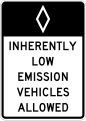
A post-mounted HOV lane sign noting that inherently low-emission vehicles are also permitted to use the carpool lane.
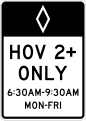
A post-mounted sign restricting the lane to HOV vehicles with two or more occupants during the posted times and days.
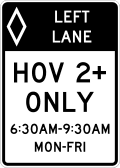
A post-mounted sign designating the two right lanes as HOV 2+ only during the listed times and days.
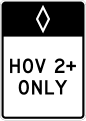
A post-mounted sign reserving the lane for HOV vehicles with two or more people at all times, every day.
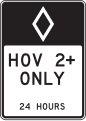
A post-mounted sign making the two right lanes HOV 2+ only on a full-time, around-the-clock basis.
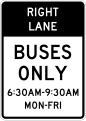
A post-mounted sign reserving the right lane for buses only during the posted times and days.
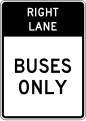
A post-mounted sign designating the right lane for buses only at all times.
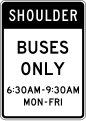
A post-mounted sign allowing only buses to use the shoulder as a travel lane during the posted times and days.
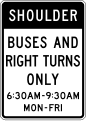
A post-mounted sign permitting buses and right-turning vehicles to use the shoulder during the listed times and days.
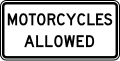
A plaque added to an HOV lane sign indicating that motorcycles are also allowed to use the restricted lane.
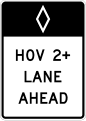
A post-mounted sign warning that an HOV lane for two-or-more-occupant vehicles begins ahead.
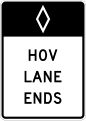
A post-mounted sign alerting drivers that the HOV lane ends ahead and normal lane rules resume.
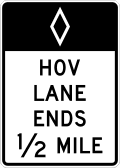
A post-mounted sign giving the distance until the HOV lane ends, so carpool drivers can plan to merge.
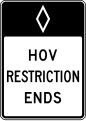
A post-mounted sign showing that the HOV occupancy restriction ends, opening the lane to all vehicles.
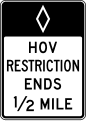
A post-mounted sign stating the distance until the HOV restriction ends and the lane opens to all traffic.
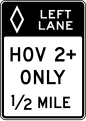
A post-mounted sign indicating that the left lane becomes HOV 2+ only in the stated distance ahead.
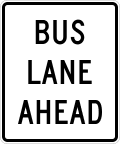
A post-mounted sign warning drivers that a bus-only lane begins ahead.
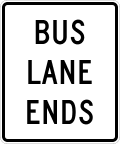
A post-mounted sign notifying drivers that the bus-only lane ends ahead.
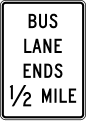
A post-mounted sign giving the distance until the bus-only lane ends.
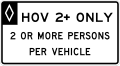
An overhead sign marking the lane below as reserved for HOV vehicles carrying two or more people.
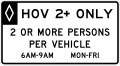
An overhead sign designating the lane below as HOV 2+ only during the posted times and days.
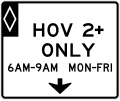
A single-line overhead sign restricting the lane below to HOV 2+ vehicles during the listed times and days.
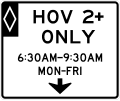
A two-line overhead sign reserving the lane below for HOV 2+ vehicles during the posted times and days.
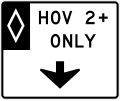
An overhead sign designating the lane below as HOV 2+ only at all times.
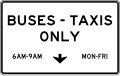
An overhead sign reserving the lane below for buses and taxis during the posted times and days.
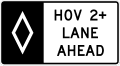
An overhead sign warning that an HOV 2+ lane begins in the lane ahead.
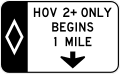
An overhead sign showing the distance until the HOV 2+ lane restriction begins.
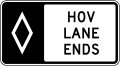
An overhead sign alerting drivers that the HOV lane below ends ahead.
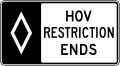
An overhead sign indicating the HOV occupancy restriction ends, opening the lane to all vehicles.
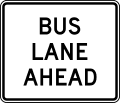
An overhead sign warning that a bus-only lane begins in the lane ahead.
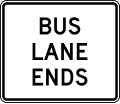
An overhead sign notifying drivers that the bus-only lane below ends ahead.
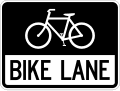
A sign marking a lane designated for bicycles, reserving that space for cyclists.
An AHEAD plaque paired with the bike lane sign, indicating that the marked bicycle lane begins just ahead.
An ENDS plaque mounted with the bike lane sign, showing where the designated bicycle lane finishes.
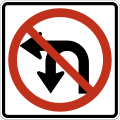
A red circle-and-slash over combined U-turn and left-turn arrows prohibiting both maneuvers at that location.
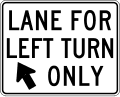
A sign showing a curved arrow that designates the lane for making left turns only.
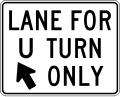
A sign with a U-shaped arrow designating the lane for making U-turns only.
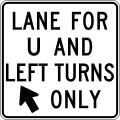
A sign designating the lane for both U-turns and left turns only.
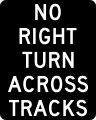
An activated blank-out sign that lights up to prohibit right turns when a train is approaching a nearby crossing.
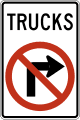
A sign prohibiting trucks specifically from making a right turn at that intersection.
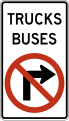
A sign forbidding both trucks and buses from turning right at that location.
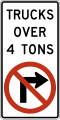
A sign prohibiting trucks over four tons from making a right turn there.
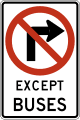
A sign banning right turns for all vehicles except buses, which are permitted to turn.
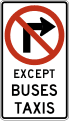
A sign prohibiting right turns for everyone except buses and taxis, which may still turn.
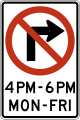
A two-line sign prohibiting right turns during the specific times and days posted on it.
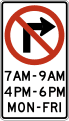
A three-line sign forbidding right turns during the times and days listed, allowing them otherwise.
.svg.png&w=256&q=75)
Right turns are prohibited during the hours and days listed on the sign. Outside those posted times, turning right at the intersection is allowed.
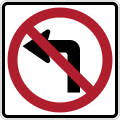
A red circle and slash over a left-turn arrow tells drivers that left turns are not permitted at this intersection.
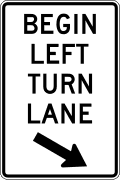
Marks where a dedicated left-turn lane begins, letting drivers planning to turn left move into it in advance of the intersection.
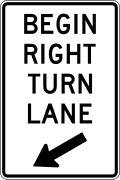
Indicates the start of a dedicated right-turn lane so drivers intending to turn right can enter it before reaching the intersection.
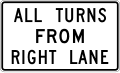
Used at jughandle intersections, it directs drivers making any turn to use the right-hand lane or ramp rather than turning from the main roadway.
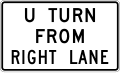
At a jughandle, this sign routes drivers making a U-turn into the right lane or ramp to reverse direction.

Points drivers making any turn toward a jughandle ramp on the right, using a diagonal arrow to show the exit path from the roadway.
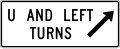
Guides drivers wanting to make a U-turn or left turn onto the right-side jughandle ramp shown by the diagonal arrow.

Directs drivers making a U-turn to take the right-side jughandle ramp indicated by the diagonal arrow.

Sends drivers making any turn onto the right-hand jughandle ramp, marked with a right-pointing arrow.
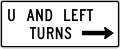
At a jughandle, routes drivers intending a U-turn or left turn onto the right-side ramp shown by the right arrow.

Tells drivers who need to make a U-turn to use the right-hand jughandle ramp indicated by the right arrow.
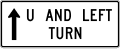
At a jughandle exit, directs drivers making a U-turn or left turn to continue straight onto the ramp shown by the up arrow.

Guides drivers making a U-turn to proceed straight ahead onto the jughandle ramp marked with an up arrow.
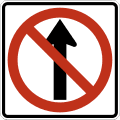
A slash through a straight-up arrow means driving straight through the intersection is prohibited; you must turn.
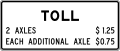
Displays the current toll price for a lane or facility so drivers can decide before entering the tolled route.
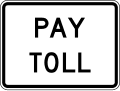
A supplemental plaque reading Pay Toll, mounted with a lane sign to tell drivers a toll payment is required ahead.
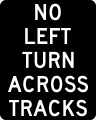
A blank-out sign that lights up only when a train is approaching, prohibiting left turns across the tracks at that moment.
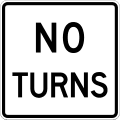
No turns are allowed at this intersection in any direction; drivers must continue straight through.
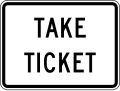
A supplemental plaque reading Take Ticket, posted at a toll plaza entrance where drivers must pull a ticket before proceeding.
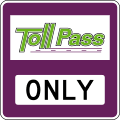
Reserves a lane for vehicles with an electronic toll pass or transponder only; drivers without one must use another lane.
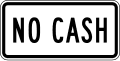
A supplemental plaque stating No Cash, warning drivers that the toll lane or facility does not accept cash payment.
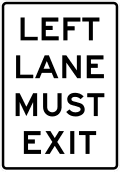
Warns that the left lane must exit the roadway ahead, so through drivers should move out of it in advance.
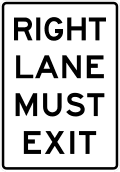
Warns that the right lane must exit the roadway ahead; drivers continuing through should merge left beforehand.
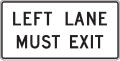
Informs drivers that the left lane is required to leave the highway at the upcoming exit.
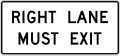
Informs drivers that the right lane is required to leave the highway at the upcoming exit.
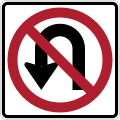
A slash through a U-turn arrow prohibits making a U-turn to reverse direction at this location.
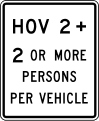
Post-mounted sign designating an HOV lane restricted to vehicles carrying two or more occupants during posted hours.
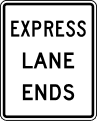
Post-mounted notice that the express lane is ending ahead, prompting drivers to prepare to merge back into general lanes.
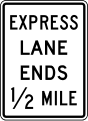
Post-mounted sign giving the distance until the express lane ends, so drivers know how far they have before merging.
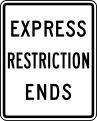
Post-mounted sign indicating that the express lane restrictions end ahead and the lane becomes open to general traffic.
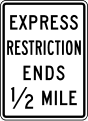
Post-mounted sign showing the distance until express-lane restrictions end and the lane reverts to normal use.
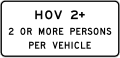
Overhead sign marking an HOV lane limited to vehicles with two or more occupants during the posted times.
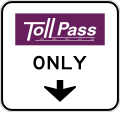
Overhead sign reserving a lane for vehicles equipped with a toll-road pass or transponder only.
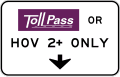
Overhead sign for a lane open to vehicles with a toll-road pass or qualifying high-occupancy vehicles.
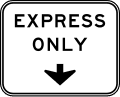
Overhead sign designating a lane for express-lane traffic only, separating it from the general-purpose lanes.
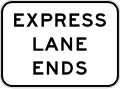
Overhead sign alerting drivers that the express lane is ending and they must merge into the regular lanes ahead.
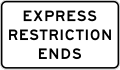
Overhead sign indicating that express-lane restrictions are ending and the lane opens to all traffic ahead.
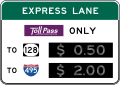
Overhead sign displaying the toll cost to use the express lane, helping drivers choose before entering.
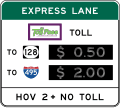
Overhead sign showing express-lane toll pricing along with the free option for qualifying high-occupancy vehicles.
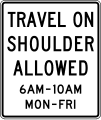
Permits driving on the shoulder as a travel lane during the specific hours and days posted, typically to ease peak congestion.

A supplemental plaque reading No Trucks, restricting trucks from the shoulder-use lane it accompanies.
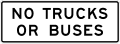
A supplemental plaque reading No Trucks or Buses, barring both from the shoulder-travel lane it accompanies.
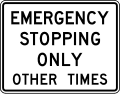
A supplemental plaque stating that outside the posted shoulder-use hours the shoulder is for emergency stopping only.
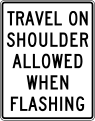
Allows driving on the shoulder as a travel lane only while the sign's beacon is flashing.
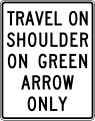
Permits use of the shoulder as a travel lane only when a green arrow signal is displayed above it.
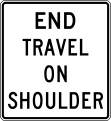
Marks the point where shoulder-use as a travel lane ends and drivers must move back into the regular lanes.
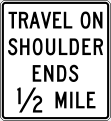
Gives the distance remaining until shoulder-lane travel ends, letting drivers plan their merge back left.
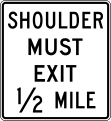
Warns, with distance shown, that the shoulder travel lane must exit the roadway ahead.
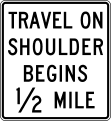
Indicates the distance until shoulder-lane travel begins, alerting drivers where they may start using the shoulder.
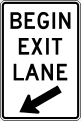
Marks the start of a dedicated exit lane, letting drivers who intend to leave the highway move into it early.
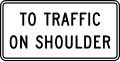
A supplemental plaque reading To Traffic on Shoulder, clarifying that the lane guidance applies to vehicles using the shoulder lane.
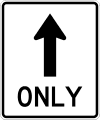
A straight-up arrow indicates this lane is for through traffic only; turning from it is not allowed.
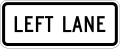
A supplemental plaque reading Left Lane, identifying which lane the accompanying regulatory sign applies to.
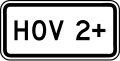
A supplemental plaque reading HOV 2+, marking the accompanying lane for vehicles carrying two or more people.
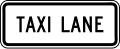
A supplemental plaque reading Taxi Lane, designating the accompanying lane for taxis.
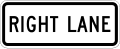
A supplemental plaque reading Right Lane, identifying which lane the accompanying regulatory sign controls.
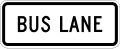
A supplemental plaque reading Bus Lane, designating the accompanying lane for buses.
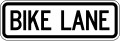
A supplemental plaque reading Bike Lane, designating the accompanying lane for bicycles.
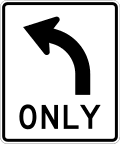
A curved left arrow tells drivers in this lane that they must turn left and may not go straight or turn right.
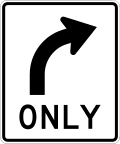
A curved right arrow tells drivers in this lane that they must turn right and may not go straight or turn left.
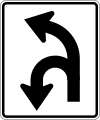
Overhead lane-control sign showing that this lane may be used for either a U-turn or a left turn.
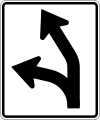
Overhead lane-control sign indicating dual left-turn lanes, both of which may turn left at the intersection.
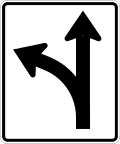
Overhead lane-control sign showing this lane may be used to go straight through or to turn left.
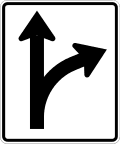
Overhead lane-control sign showing this lane may be used to go straight through or to turn right.
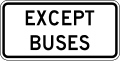
A supplemental plaque reading Except Buses, exempting buses from the lane restriction on the sign it accompanies.
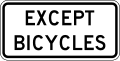
A supplemental plaque reading Except Bicycles, exempting bicycles from the accompanying lane-use restriction.
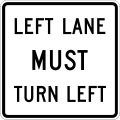
Requires drivers in the left lane to turn left at the intersection ahead.
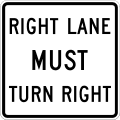
Requires drivers in the right lane to turn right at the intersection ahead.
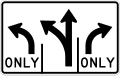
Advance lane-use sign showing how three lanes are assigned at the upcoming intersection, with the left lane turning left.
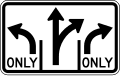
Advance lane-use sign showing three lanes' assignments at the upcoming intersection, with the right lane turning right.
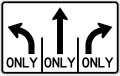
Advance lane-control sign illustrating the permitted movements for each of three lanes before an intersection.
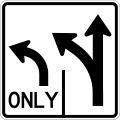
Advance lane-use sign for a two-lane approach, showing the left lane turning left and the other continuing through.
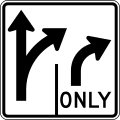
Advance lane-use sign for a two-lane approach, showing the right lane turning right and the other continuing through.
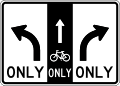
Advance lane-control sign that includes a bike lane, showing how motor-vehicle lanes and cyclists are assigned at the intersection.
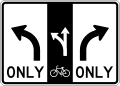
Advance intersection lane-control sign incorporating a bike lane, clarifying lane movements for both drivers and cyclists.
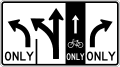
Advance intersection lane-control sign with a bike lane, indicating the assigned movements for each lane approaching the junction.
.svg.png&w=256&q=75)
Advance lane-use guidance for a two-lane roundabout, showing which lane to choose for the destinations at a circular intersection.
.svg.png&w=256&q=75)
Lane-assignment sign for a two-lane roundabout, helping drivers pick the correct lane before entering the circular intersection.
.svg.png&w=256&q=75)
Advance lane-choice diagram for a two-lane roundabout, indicating which lane serves each exit at the circular intersection.
.svg.png&w=256&q=75)
Roundabout lane-control sign for two lanes, showing drivers the proper lane for their intended exit before entering.
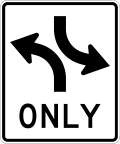
Overhead sign marking a center two-way left-turn lane shared by traffic from both directions for making left turns.
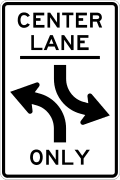
Post-mounted sign identifying a center two-way left-turn lane used by vehicles from either direction to turn left.
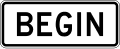
A supplemental plaque reading Begin, marking where the two-way left-turn lane it accompanies starts.
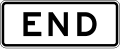
A supplemental plaque reading End, marking where the two-way left-turn lane it accompanies stops.
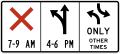
Overhead sign for a reversible lane, showing the direction of travel currently allowed in that lane.
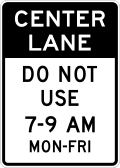
Post-mounted sign for a reversible lane, indicating the direction traffic may currently flow in it.
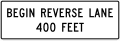
Advance sign warning of an upcoming reversible-lane transition so drivers can prepare for the changing lane direction.
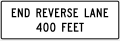
Advance notice of a reversible-lane control transition ahead, alerting drivers to a shift in permitted lane direction.
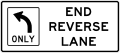
Marks the end of a reversible lane, telling drivers where the special direction-changing lane concludes.
R4 series Regulation of movement
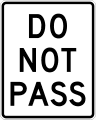
Prohibits passing other vehicles along this stretch of road until a Pass With Care sign or lane marking allows it again.
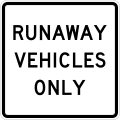
Marks a runaway truck ramp reserved for vehicles that have lost braking ability on a steep downgrade; no other use is permitted.
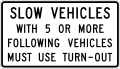
On mountain and rural roads, requires a slow vehicle holding up five or more following vehicles to use a designated turnout to let them pass.
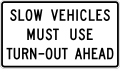
Alerts slow-moving vehicles that a turnout is ahead where they should pull over to allow faster traffic to pass.
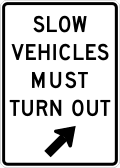
Directs slow-moving vehicles to pull into the turnout here and let the vehicles behind them pass.
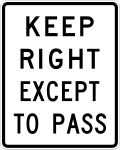
Requires drivers to keep right and use the left lane only when passing, keeping the passing lane clear for faster traffic.
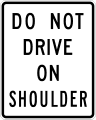
Prohibits driving on the shoulder of the roadway; the shoulder is not a travel lane here.
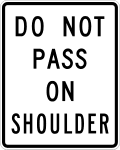
Forbids using the shoulder to pass other vehicles; passing on the shoulder is not allowed.
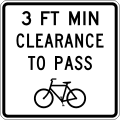
States the minimum side clearance drivers must give when passing a bicyclist, reinforcing safe-passing distance laws.
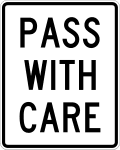
Follows a no-passing zone to tell drivers that passing is now permitted when it is safe to do so.
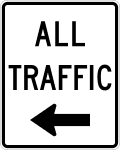
Requires all traffic in the lane to turn left; continuing straight or turning right is not allowed.
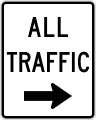
Requires all traffic in the lane to turn right; going straight or turning left is not permitted.
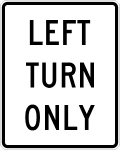
A word-message sign designating a left-turn-only lane, requiring drivers in it to turn left.
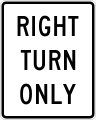
A word-message sign designating a right-turn-only lane, requiring drivers in it to turn right.
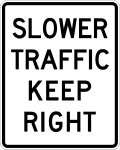
Directs slower-moving vehicles to stay in the right lane so faster traffic can pass on the left, keeping the flow smooth on multilane highways.
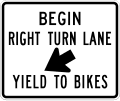
Marks where a right-turn lane begins and warns turning drivers to yield to bicyclists continuing straight in the adjacent bike lane.
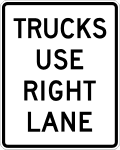
Requires trucks to travel in the right lane, typically on grades or multilane roads, to separate heavy vehicles from faster passenger traffic.
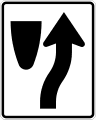
Tells drivers to keep to the right of a median, island, or obstruction directly ahead in the roadway.
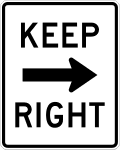
A variant Keep Right sign posted at a median or island, instructing drivers to pass to the right side of the divider ahead.
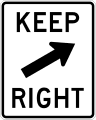
Another Keep Right version marking a roadway obstruction or divider, guiding traffic to pass on the right.
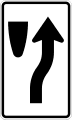
Warns of an obstacle in the road and directs drivers to steer to the right to pass it safely.
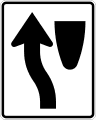
Instructs drivers to keep to the left of a median, island, or obstruction ahead in the roadway.
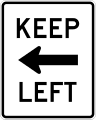
A variant Keep Left sign at a median or island, telling drivers to pass to the left of the divider ahead.
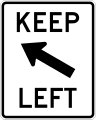
Another Keep Left version marking a divider or obstruction, directing traffic to pass on the left side.
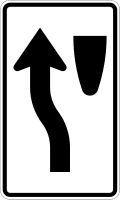
Warns of an obstacle ahead and directs drivers to steer to the left to pass it safely.
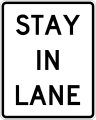
Requires drivers to remain in their current lane and prohibits changing lanes or crossing the lane line at this location.
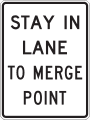
Tells drivers to hold their lane until the marked merge point rather than changing lanes early.
R5 series Exclusionary
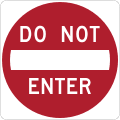
Prohibits entry into a roadway, ramp, or lane. Drivers facing this red-and-white sign must not proceed, often because of one-way or wrong-way traffic.
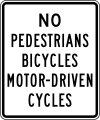
Prohibits pedestrians, bicycles, and motor-driven cycles from using this roadway, usually a limited-access facility not built for them.
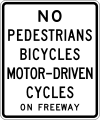
Bans pedestrians, bicycles, and motor-driven cycles from entering a freeway, which is restricted to full-speed motor vehicles only.
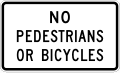
Prohibits both pedestrians and bicycles from using this road or facility ahead.
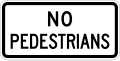
Prohibits pedestrians from walking along or crossing this roadway.
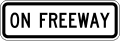
A supplemental plaque reading On Freeway, mounted below a prohibition sign to clarify that the restriction applies to the freeway.
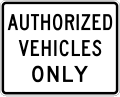
Restricts a road or area to authorized vehicles only; unauthorized traffic is not permitted beyond this point.
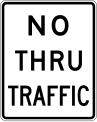
Prohibits through traffic; only vehicles with local business or a destination on this street may proceed.
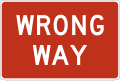
A red Wrong Way sign warning a driver who has entered a lane against the flow to stop and turn around immediately.
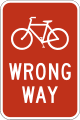
Alerts bicyclists that they are traveling against traffic and must reverse direction to ride the correct way.
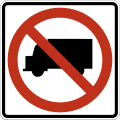
Prohibits trucks from using this road or lane, commonly on residential streets or routes with weight or clearance limits.
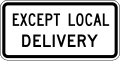
A plaque reading Except Local Delivery, added below a No Trucks sign to allow trucks making deliveries on that street.
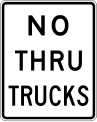
Bans through trucks; only trucks with a local destination or delivery on this route are permitted.
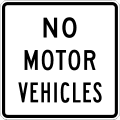
Prohibits motorized vehicles on this path or roadway, typically a trail reserved for non-motorized use.
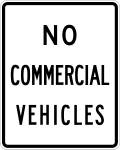
Prohibits commercial vehicles from using this road or lane.
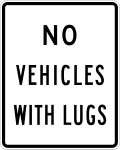
Prohibits vehicles with lugged or cleated tires or tracks that could damage the pavement.
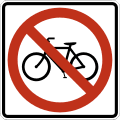
Prohibits bicycles from using this roadway, ramp, or facility.
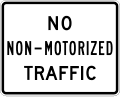
Prohibits non-motorized traffic such as pedestrians, bicycles, and horses from this roadway.
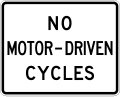
Prohibits motor-driven cycles, such as mopeds and small motorbikes, from this road or facility.
R6 series One way and divided highway
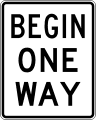
An R6-6 divided-highway sign marking the point where a two-way road becomes a divided roadway, keeping traffic to the correct side.
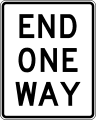
An R6-7 divided-highway sign indicating where a divided roadway ends and traffic returns to two-way operation.
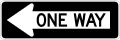
A One Way sign with the arrow pointing left, showing that traffic on the intersecting street flows only in the left-hand direction.

A One Way sign with the arrow pointing right, showing that traffic on the intersecting street flows only in the right-hand direction.
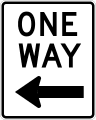
A One Way sign with a large directional arrow pointing left, marking a street that carries traffic in the left direction only.
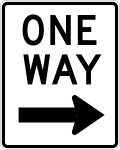
A One Way sign with a large directional arrow pointing right, marking a street that carries traffic in the right direction only.
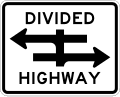
Warns at an intersection that the cross road is a divided highway, so drivers must turn into the correct roadway of the divided route.
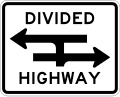
Marks a T-intersection with a divided highway, guiding turning drivers to enter the proper side of the divided cross road.
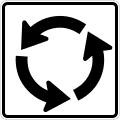
A roundabout circulation plaque with a curved arrow, mounted below other signs to show that traffic moves counterclockwise around the circle.
R7 series Parking
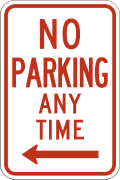
Prohibits parking at this location at all times, day and night.
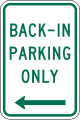
Requires vehicles to back into the parking space rather than pull in front-first.
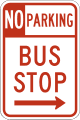
Marks a bus stop where parking is prohibited so buses can pull to the curb and pick up passengers.
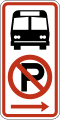
A bus-stop no-parking sign, an alternate layout keeping the curb clear for transit buses.
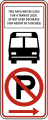
A bus-stop no-parking sign with a transit pictograph, marking a reserved bus loading zone where parking is banned.
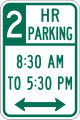
Allows parking for up to two hours during the posted times; vehicles left longer may be ticketed.
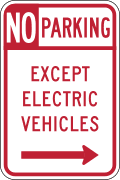
Prohibits parking except for electric vehicles, reserving the space for EV use.
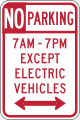
Prohibits parking during the posted times except for electric vehicles, which may use the space.
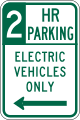
Reserves the space for electric vehicles only, with a two-hour parking limit.
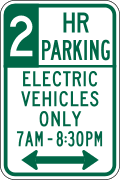
Limits parking to two hours for electric vehicles only during the posted times.
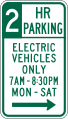
Limits parking to two hours for electric vehicles only during the posted times and days.
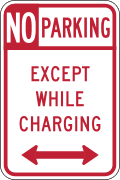
Prohibits parking except for vehicles actively charging at the station.
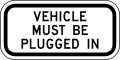
A plaque stating the vehicle must be plugged in, mounted below an EV charging-parking sign to require active charging.
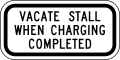
A plaque instructing drivers to vacate the charging stall once charging is complete, keeping the station available.
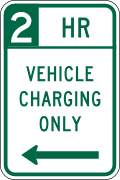
Allows two-hour parking limited to vehicles that are charging at the station.
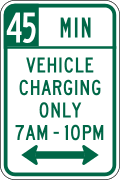
Limits parking to 45 minutes for charging vehicles only during the posted times.
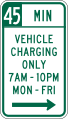
Limits parking to 45 minutes for charging vehicles only during the posted times and days.
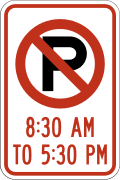
Prohibits parking during the posted hours; parking is allowed at other times.
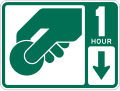
Marks a pay-and-display parking area where drivers must pay at a fee station before leaving their vehicle.
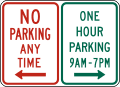
A combined sign banning parking during certain hours and allowing one-hour parking during others, as posted.
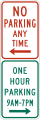
An alternate combined sign showing no-parking periods together with a one-hour parking limit during the posted times.
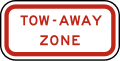
A Tow-Away Zone plaque, mounted below a parking-restriction sign to warn that violators will be towed.
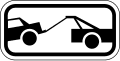
A Tow-Away Zone sign warning that vehicles parked in violation of the posted rules will be towed at the owner's expense.
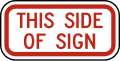
A plaque with an arrow indicating that the parking restriction applies to the side of the sign it points toward.
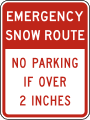
Marks a snow emergency route where parking is banned during a declared snow emergency and violators are towed.
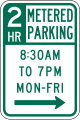
Marks metered parking with a two-hour limit during the posted times and days.
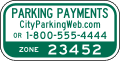
A plaque explaining accepted parking payment methods, mounted below a metered-parking sign.
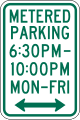
Marks metered parking that is enforced during the posted times and days.
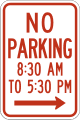
An alternate No Parking sign prohibiting parking during the posted hours.
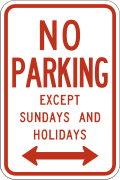
Prohibits parking except on Sundays and holidays, when parking is allowed.
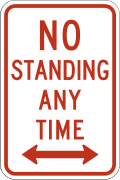
Prohibits standing at all times; a vehicle may not wait here even with the driver present.
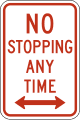
Prohibits stopping at all times, even briefly to load or drop off, at this location.
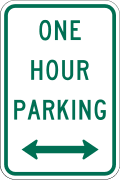
Allows parking for up to one hour at this location.
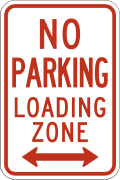
Marks a loading zone where general parking is prohibited so vehicles can load and unload.
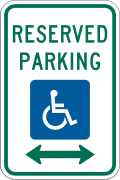
Reserves the parking space for vehicles displaying a disability permit or plate, shown by the wheelchair symbol.
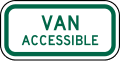
A Van Accessible plaque, mounted below an accessible-parking sign to designate a wider space for wheelchair vans.
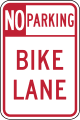
Prohibits parking in a bike lane to keep it clear for bicyclists.
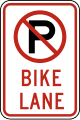
An alternate no-parking-in-bike-lane sign keeping the marked bicycle lane free of parked vehicles.
R8 series Parking and emergency restrictions
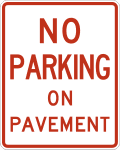
Prohibits parking on the paved surface of the roadway at this location.
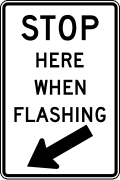
Tells drivers to stop at this point when the beacon is flashing, such as at a rail crossing or emergency signal.
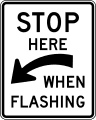
An alternate Stop Here When Flashing sign marking the required stopping point when the warning beacon is active.
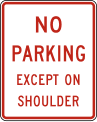
Prohibits parking on the roadway but permits stopping or parking on the shoulder.
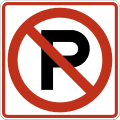
A symbolic No Parking sign prohibiting parking at this location.
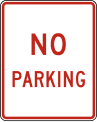
A word-message No Parking sign prohibiting parking at this location.
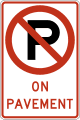
Prohibits parking on the paved portion of the road at this location.
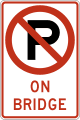
Prohibits parking on the bridge to keep the crossing clear of stopped vehicles.
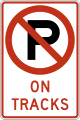
Prohibits parking on railroad tracks, where a stopped vehicle could be struck by a train.
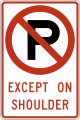
Prohibits parking on the roadway but allows parking on the shoulder.
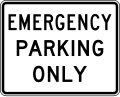
Restricts stopping or parking to emergencies only, such as on a freeway shoulder.
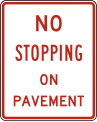
Prohibits stopping on the paved roadway at this location.
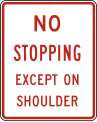
Prohibits stopping on the roadway but permits stopping on the shoulder.
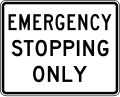
Restricts stopping to emergencies only at this location, such as a highway shoulder.
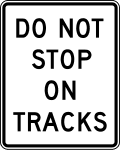
Warns drivers never to stop on the railroad tracks, where a halted vehicle risks being hit by a train.
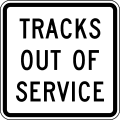
Advises that the railroad tracks at this crossing are out of service and no longer used by trains.
R9 series Bicycles and pedestrians
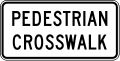
An R9-8 regulatory sign directing pedestrians to use a specified crosswalk or path rather than crossing elsewhere.
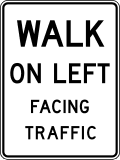
Instructs pedestrians on roads without sidewalks to walk on the left, facing oncoming traffic for safety.
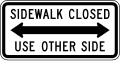
Alerts pedestrians that the sidewalk ahead is closed and directs them to use the sidewalk on the other side of the street.
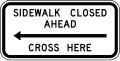
Warns that the sidewalk is closed ahead and directs pedestrians to cross here to the opposite side.
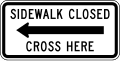
Marks a closed sidewalk and directs pedestrians to cross to the other side at this point.
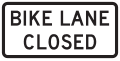
Alerts bicyclists that the bike lane ahead is closed, typically for construction or an obstruction.
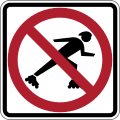
Prohibits skaters and inline skating on this roadway, path, or facility.
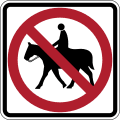
Prohibits horseback riders and other equestrians from using this roadway or trail.
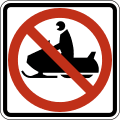
Prohibits snowmobiles from using this roadway, trail, or facility.
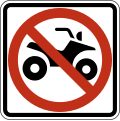
Prohibits all-terrain vehicles from using this roadway, path, or trail. Riders must keep ATVs off the route beyond this point.
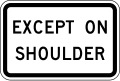
A supplemental plaque mounted below a prohibition sign, noting the restriction does not apply on the shoulder, where the movement is still permitted.
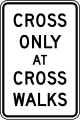
Directs pedestrians to cross the street only within marked crosswalks rather than mid-block, keeping foot traffic to safe crossing points.
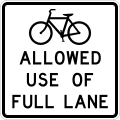
Tells drivers that bicyclists may legally occupy the entire travel lane here, so motorists should expect to share and follow behind until it is safe to pass.
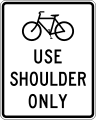
Requires bicyclists to ride only on the roadway shoulder along this stretch rather than in the main travel lane.
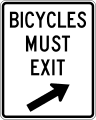
Warns bicyclists that they must leave this roadway ahead, typically before a freeway or restricted section where cycling is not allowed.
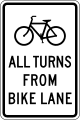
Instructs bicyclists to make all turns from the bike lane, positioning themselves in the designated lane before turning.
.svg.png&w=256&q=75)
Directs bicyclists to begin a left turn from the bike lane, guiding cyclists to turn left from the marked bicycle lane.
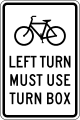
Tells bicyclists making a left turn to use the two-stage turn box, crossing the intersection straight first and then completing the left turn from the box.
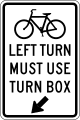
A variant instructing left-turning bicyclists to use the designated two-stage turn box to complete the maneuver safely across the intersection.

Marks a bike lane from which cyclists may make all turns, shown with a diagonal right arrow indicating the turning movement.

Indicates a bike lane where cyclists may make all turns, using a right-pointing arrow to show the permitted turning direction.
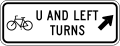
Designates a bike lane where bicyclists may make U-turns and left turns, illustrated with a diagonal right arrow.
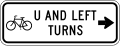
Marks a bicycle lane allowing U-turns and left turns, shown with a right-pointing arrow for the movement.
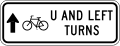
Identifies a bike lane where cyclists may make U-turns and left turns, using a straight upward arrow.

Shows a bike lane from which bicyclists may make a U-turn, indicated with a diagonal right arrow.

Marks a bicycle lane where U-turns are permitted, using a right-pointing arrow to signal the movement.
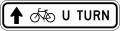
Designates a bike lane allowing bicyclists to make a U-turn, shown with a straight upward arrow.
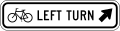
Marks a bike lane from which cyclists may make a left turn, illustrated with a diagonal right arrow.

Indicates a bicycle lane where a left turn is permitted, shown with a right-pointing arrow.
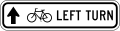
Designates a bike lane allowing a left turn, using a straight upward arrow to show the movement.
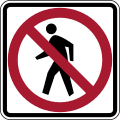
Prohibits pedestrians from crossing at this location, shown with a symbol of a walking figure inside a red circle and slash.
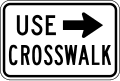
A supplemental plaque directing pedestrians to use the crosswalk, usually paired with a no-crossing sign to point people to the proper crossing.
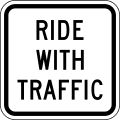
A plaque instructing bicyclists to ride with the flow of traffic, reinforcing that cyclists travel in the same direction as vehicles.
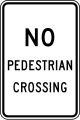
A word-message version telling pedestrians they may not cross the street at this point and must find a designated crossing.
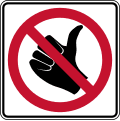
Prohibits hitchhiking at this location, shown with a symbol of a figure with an outstretched thumb crossed out.
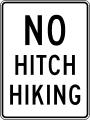
A text version of the no-hitchhiking sign, banning soliciting rides from passing vehicles along this roadway.
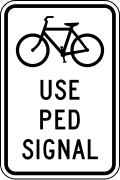
Instructs bicyclists to obey the pedestrian signal when crossing here, following the walk and don't-walk indications.
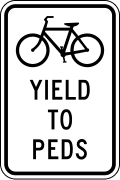
Requires bicyclists to yield to pedestrians, typically on a shared path or sidewalk where people on foot have the right of way.
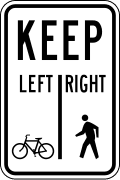
Separates traffic on a shared path, directing bicyclists to keep left and pedestrians to keep right.
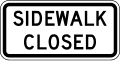
Notifies pedestrians that the sidewalk is closed ahead, usually due to construction, and that they should find an alternate route.
R10 series Traffic signal
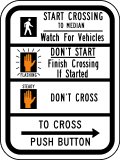
A pedestrian pushbutton sign at a signalized crossing, instructing walkers to press the button and wait for the walk signal before crossing.
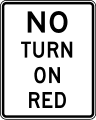
A no-turn-on-red sign posted at a traffic signal, prohibiting drivers from turning against the red indication at this intersection.
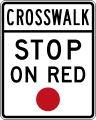
A traffic signal regulatory sign in the R10 series governing driver behavior at the intersection, such as stopping and yielding at flashing indications.
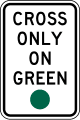
Tells pedestrians to begin crossing only when the signal shows green, keeping foot traffic in step with the traffic light.
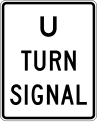
Directs drivers that U-turns at this intersection are controlled by a dedicated traffic signal, which they must obey.
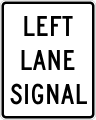
Indicates that the left lane is governed by its own traffic signal, telling drivers in that lane to follow the corresponding indication.
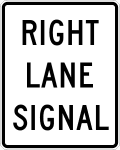
Indicates that the right lane has its own traffic signal, directing drivers in that lane to obey the matching indication.
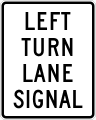
Tells drivers that the left-turn lane is controlled by a separate signal, requiring them to follow that turn indication.
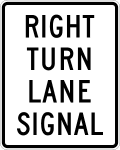
Tells drivers that the right-turn lane is controlled by a separate signal, requiring them to obey that turn indication.
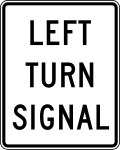
Notifies drivers that left turns at this intersection are governed by a dedicated left-turn signal.
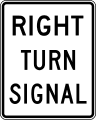
Notifies drivers that right turns at this intersection are governed by a dedicated right-turn signal.
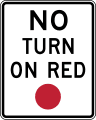
Prohibits any turn while the signal shows a circular red, requiring drivers to wait for a green before proceeding.
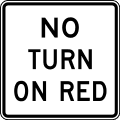
A word-message sign banning turns on a red light at this intersection, so drivers must wait for green.
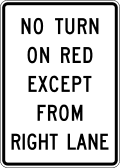
Allows a turn on red only from the right lane, prohibiting the movement from other lanes while the light is red.
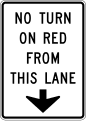
Prohibits turning on red specifically from the lane where the sign is posted, while other lanes may be permitted.
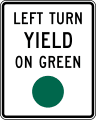
Reminds left-turning drivers that they must yield to oncoming traffic when turning on a green ball signal.
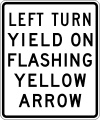
Tells left-turning drivers that a flashing yellow arrow means they may turn but must yield to oncoming traffic and pedestrians.
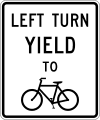
Reminds left-turning drivers to yield to bicyclists crossing their path during the turn.
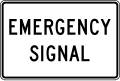
Marks an emergency traffic signal, typically at a fire station, that activates to stop traffic when emergency vehicles enter the road.
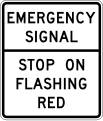
Instructs drivers to stop when the emergency signal flashes red, allowing emergency vehicles to pull out safely.
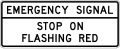
An overhead version telling drivers to stop when the emergency signal shows flashing red so emergency vehicles can proceed.
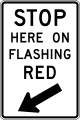
Marks the exact point where drivers must stop when the emergency signal is flashing red.
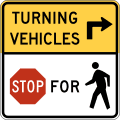
A turning-vehicles-yield-to-pedestrians sign posted at a signal, reminding drivers to give way to people in the crosswalk while turning.
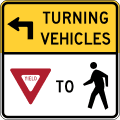
Reminds drivers making a left turn to yield to pedestrians crossing in the crosswalk during the turn.
.svg.png&w=256&q=75)
A high-visibility fluorescent sign telling left-turning drivers to yield to pedestrians in the crosswalk.
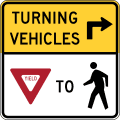
Reminds drivers making a right turn to yield to pedestrians crossing in the crosswalk during the turn.
.svg.png&w=256&q=75)
A high-visibility fluorescent sign telling right-turning drivers to yield to pedestrians in the crosswalk.
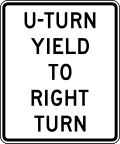
Requires drivers making a U-turn to yield to vehicles turning right into the same lane at this signalized intersection.
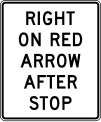
Permits a right turn on a red arrow only after coming to a complete stop, then yielding before proceeding.
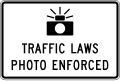
Warns drivers that traffic laws at this location are enforced by automated cameras that photograph violations.
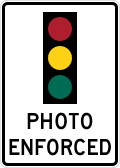
Notifies drivers that red-light running at this signal is monitored and enforced by automated photo cameras.
A supplemental word plaque stating that the location is photo enforced, mounted below the main traffic sign.

A supplemental plaque with a camera symbol indicating the intersection is monitored by automated photo enforcement.
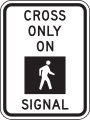
Tells pedestrians to begin crossing only when the pedestrian signal permits it, obeying the walk indication.
.svg.png&w=256&q=75)
A two-line plaque showing the days and times a turn restriction applies, used with the no-turn-on-red series.
.svg.png&w=256&q=75)
A three-line plaque listing the days and times a turn restriction is in effect, paired with a no-turn-on-red sign.
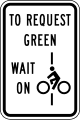
Instructs bicyclists to wait on the marked line at a signal that detects them, so the detector can register the cyclist and turn the light green.
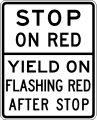
Tells drivers to stop on a steady red and, on a flashing red, to stop and then yield before proceeding when clear.
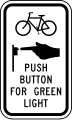
Directs bicyclists to press a pushbutton to trigger a green light at this signalized crossing.
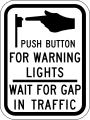
Instructs pedestrians to push the button to activate warning lights, then wait for a gap in traffic before crossing.
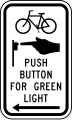
Directs bicyclists to press a pushbutton, shown with an arrow pointing to it, to request a green light.
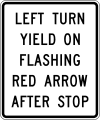
Tells left-turning drivers that a flashing red arrow means to stop first, then yield and turn when the way is clear.
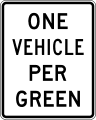
Limits traffic to one vehicle proceeding per green indication, used at ramp meters to space out merging cars.
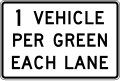
Restricts each lane to one vehicle per green signal, controlling the flow of cars at a metered ramp.
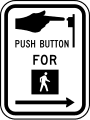
Directs pedestrians to push the button to activate the crossing signal before stepping into the crosswalk.
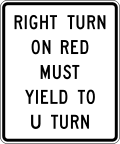
Requires drivers turning right on red to yield to vehicles making a U-turn into the same lane.
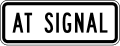
A supplemental plaque reading "at signal," clarifying that an accompanying instruction applies at the traffic signal.
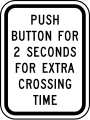
A pedestrian plaque telling walkers to hold the pushbutton for two seconds to receive extra time to cross.
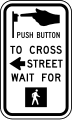
Instructs pedestrians to push the button to cross the street and then wait for the pedestrian walk signal.
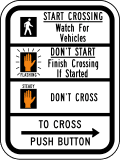
A pedestrian signal instruction sign explaining how to use the pushbutton and interpret the walk and don't-walk indications.
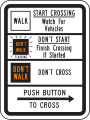
A crosswalk signal instruction sign guiding pedestrians on operating the pushbutton and obeying the walk signal.
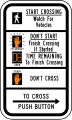
A pedestrian instruction sign at a crosswalk detailing how to activate the signal and cross safely.
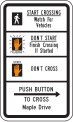
A crosswalk signal instruction sign explaining the pushbutton and walk-signal procedure for pedestrians.
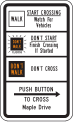
A pedestrian crosswalk instruction sign describing how to use the pushbutton and follow the walk signal.
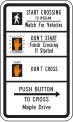
A crosswalk signal instruction sign guiding pedestrians through operating the pushbutton and crossing on the signal.
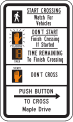
A pedestrian instruction sign at a signalized crosswalk explaining the pushbutton and walk-signal steps for crossing.
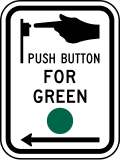
Directs drivers to push a button to trigger a green light at this actuated signal.
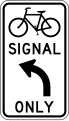
Governs bicyclists at a bicycle signal, indicating a mandatory turning movement they must follow when the signal permits.
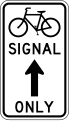
Governs bicyclists at a bicycle signal, indicating a mandatory through movement they must follow.
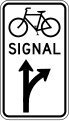
Informs bicyclists that the bicycle signal permits optional through and turning movements from this location.
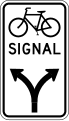
Informs bicyclists that the bicycle signal permits optional left and right turns at this crossing.
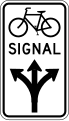
Tells bicyclists that the bicycle signal permits all optional movements, including through and turns.
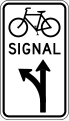
Informs bicyclists that the bicycle signal permits optional left turns and through movements at this location.
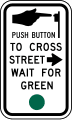
Instructs pedestrians to push the button to cross the street and then wait for the green light before proceeding.
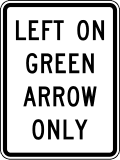
Permits left turns only when a green arrow is displayed, prohibiting the turn on a green ball or other indication.
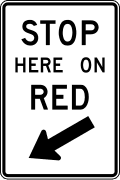
Marks the point where drivers must stop when the traffic signal is red, keeping vehicles behind the stop line.
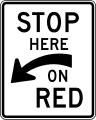
An alternative stop-here-on-red sign with a left-pointing arrow indicating the stop position on a red signal.
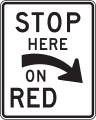
An alternative stop-here-on-red sign with a right-pointing arrow marking where to stop on a red signal.
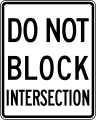
Prohibits drivers from entering an intersection they cannot fully clear, keeping the crossing open even when traffic backs up.
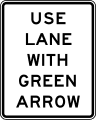
Directs drivers to use only the lane displaying a green arrow, indicating which lanes are open for travel.
R11 series Road closed
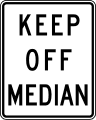
Prohibits drivers from crossing or driving onto the median, keeping vehicles in the proper travel lanes.
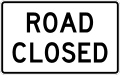
Marks a road that is closed to all traffic ahead, requiring drivers to turn around and find another route.
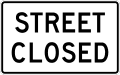
Notifies drivers that the street ahead is closed, directing them to seek an alternate way through.
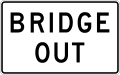
Warns that the bridge ahead is out and impassable. The roadway cannot be used, so you must stop and turn back or follow the marked detour.
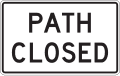
Posted where a trail, sidewalk, or shared-use path is closed. Pedestrians and cyclists cannot continue through and must use an alternate route.
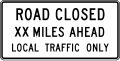
Alerts you that the road is closed a stated number of miles ahead. Only local traffic with a destination before the closure should continue.
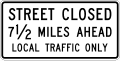
Advance warning that the street ahead is closed at the distance shown. Only vehicles with local business beyond this point should proceed.
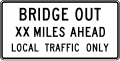
Warns that a bridge is out the stated distance ahead. Through traffic must turn around; only local traffic needing access before the bridge may continue.
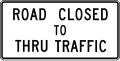
The road is open only to traffic with a local destination. Drivers passing through to somewhere beyond must find another route.
R12 series Weight limits

Sets a maximum weight limit for trucks, shown with truck symbols. Vehicles exceeding the posted weight are prohibited from using this road or bridge.
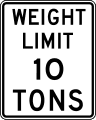
Posts the maximum gross weight allowed on a road or structure. Vehicles heavier than the figure shown must not proceed and should detour.
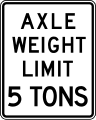
Limits the maximum weight carried on a single axle. Trucks whose axle loads exceed this figure may not use the bridge or roadway.
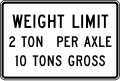
States separate weight limits per axle and total gross weight. Trucks must satisfy both figures to legally cross the structure ahead.
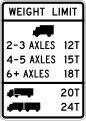
Displays weight limits that apply specifically to special hauling vehicles. Operators of oversized or heavy loads must confirm they meet the posted restriction.
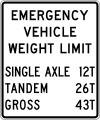
Posts a weight limit that applies to emergency vehicles crossing a bridge or structure. Responding units must confirm their load stays within the figure shown.
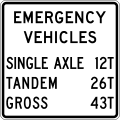
A supplemental plaque mounted with a weight-limit sign to note that the stated limit applies to emergency vehicles.
R13 series Weigh stations
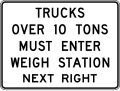
Directs trucks over ten tons to enter the weigh station at the next right. Affected commercial vehicles are required to pull in.
R14 series Truck routes
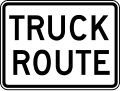
Marks a designated truck route. Trucks should follow these signs to stay on roads approved for heavy commercial through traffic.
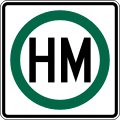
Identifies a route designated for vehicles carrying hazardous materials. Trucks hauling regulated cargo should follow this marked path.
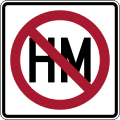
Prohibits vehicles carrying hazardous materials on this road. Trucks transporting regulated or dangerous cargo must use an approved alternate route.
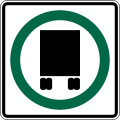
A truck-route marker that carries a route designation, guiding trucks along the approved path for commercial traffic.
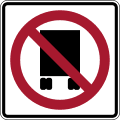
Indicates that large trucks on the National Truck Network are prohibited beyond this point and must follow a different route.
R15 series Rail and light rail
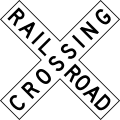
The railroad Crossbuck marking a highway-rail grade crossing. Yield to any approaching train and be prepared to stop before the tracks.
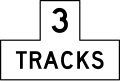
A plaque mounted below the Crossbuck showing how many tracks the crossing has, so drivers watch for trains on each one.
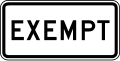
A plaque noting that vehicles normally required to stop at railroad crossings, such as buses and trucks, are exempt from stopping here.
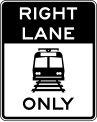
Reserves the right lane for light rail transit only. Regular vehicles must keep out of that lane and use the others.
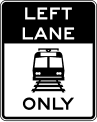
Reserves the left lane for light rail transit only. Other traffic must not travel in that lane.
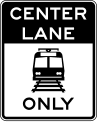
Reserves the center lane for light rail transit only. Cars must stay clear and use the adjacent through lanes.
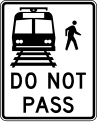
Prohibits passing trains that are stopped, since more than one may be present. Wait until the way across the tracks is clearly safe.
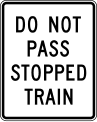
Instructs drivers not to overtake a stopped train. Hold your position until the train clears and the crossing is confirmed safe.
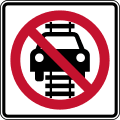
Forbids driving a vehicle along or onto the rail tracks. Keep off the trackway, which is reserved for trains only.
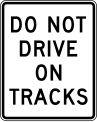
Reinforces that motor vehicles must not drive on the railroad or light rail tracks. Stay within the roadway lanes at all times.
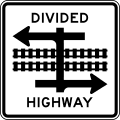
Marks a transit rail crossing on a divided highway, alerting drivers to watch for light rail trains crossing the roadway.
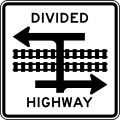
Marks a divided-highway transit rail crossing at a T-intersection, warning drivers to watch for light rail trains where the roads meet.
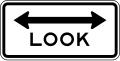
Reminds drivers to look both ways for approaching trains before crossing the tracks ahead.
R16 series Seat belts and headlight use
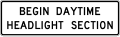
Marks the start of a section where daytime headlight use is required. Turn your headlights on to stay visible along this stretch.
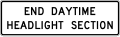
Marks the end of the daytime headlight section. Beyond this point running your headlights during the day is no longer required.
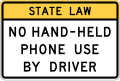
Prohibits drivers from using a hand-held phone while driving. Use hands-free operation or wait until you are safely parked.
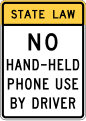
Bans hand-held cell phone use by the driver in this area. Keep both hands on the wheel and go hands-free.
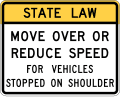
Requires drivers to move over a lane or slow down for vehicles stopped on the shoulder, protecting responders and stranded motorists.
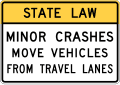
Advises that after a minor crash with no injuries, drivers should move their vehicles out of the travel lanes to keep traffic flowing.
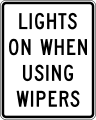
Requires headlights to be on whenever the windshield wipers are in use, improving visibility during rain or snow.
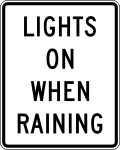
Requires drivers to turn on their headlights whenever it is raining, making vehicles easier to see in wet conditions.
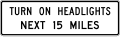
Directs drivers to switch on headlights for the stated number of miles ahead, typically through a tunnel or low-visibility stretch.
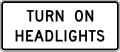
Instructs drivers to turn their headlights on at this point, usually approaching a tunnel or a section requiring extra visibility.
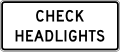
Reminds drivers to check that their headlights are turned off or on as appropriate, often placed after a mandatory-headlight section.
R22 series Blasting zones
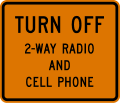
Warns that you are entering a blasting zone and must turn off two-way radios and cell phones to prevent triggering explosives.
Have a question? Contact Us
Have questions about preparing for your DMV exam or need assistance with our tools? Reach out to us — we're here to help you succeed on your journey to getting your license

Send us a message
By sending this message, you agree to our terms and conditions.