How to Pass the West Virginia DMV Exam 2026
Step 1: Confirm Eligibility and Gather Your Documents
Make sure you qualify before you begin
West Virginia licenses drivers through the Division of Motor Vehicles (DMV). Teens can begin the Graduated Driver's License program with a Level 1 instruction permit at 15, while anyone 18 or older can apply for a regular Class E instruction permit. Bring the right paperwork so your first office visit counts.
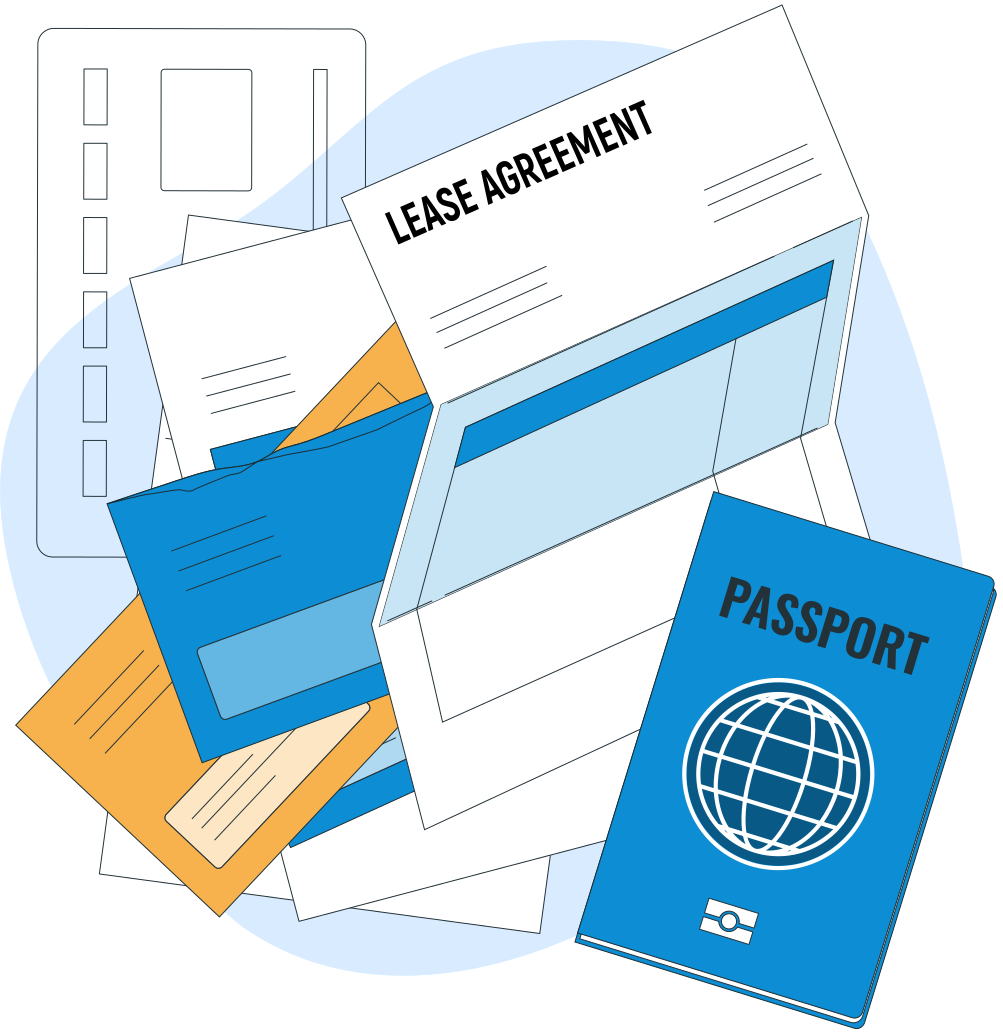
- Proof of identity, such as a certified U.S. birth certificate or valid passport
- Your Social Security card, or an SSA denial letter if you are not eligible for a number
- Two documents proving your West Virginia residency, such as a utility bill, bank statement, or lease
- If you are under 18, a certified birth certificate, a School Driver Eligibility Certificate, and parental or guardian consent signed on form DMV-DS-23P
Every applicant must also pass a vision screening of at least 20/40 in one eye, and color recognition is checked. You can read the official rules in the West Virginia Driver's Licensing Handbook before you go.
Step 2: Study the Official West Virginia Handbook
Prepare for the knowledge test
The West Virginia knowledge test is written directly from the official Driver's Licensing Handbook published by the DMV, so studying it is the single best thing you can do. The handbook is published in English only. Read the full West Virginia Driver's Licensing Handbook here.
- Learn the sign shapes and colors, traffic signals, and pavement markings
- Memorize the West Virginia numbers: the three-to-four second following rule, signaling at least 100 feet before a turn, parking within 18 inches of the curb, and the 15 mph school zone limit
- Review West Virginia rules such as the 0.02% limit for drivers under 21, the 25/50/25 insurance minimums, the 12-point suspension threshold, and the duty of traffic in both directions to stop for a school bus with red lights flashing
Work through West Virginia practice tests until you consistently score above 76%, and pay extra attention to any question you miss twice.
Step 3: Pass the Vision and Knowledge Tests
Take the tests that unlock your permit
Every applicant takes a vision test, and beginning drivers must pass the knowledge examination. West Virginia gives the exam on automated testing machines at every DMV office.
- The knowledge test has at least 25 questions, and you must answer 19 correctly to pass, so no more than 6 mistakes are allowed
- There is a time limit, and any question you do not answer in time is scored as incorrect
- The vision standard is 20/40 in at least one eye; if you fall short, form DLAB-2 completed by a vision specialist may be required
- The knowledge test fee is $7.50 per attempt, and no cell phones or other electronic devices are allowed in the exam room
West Virginia also offers a supervised Know To Drive online knowledge test with facial recognition safeguards, though the online certificate is not permission to drive on its own.

Step 4: Get Your West Virginia Instruction Permit
Start practicing legally
Once you pass the vision and knowledge tests, the DMV can issue your instruction permit. The path depends on your age: teens 15 to 17 receive a Level 1 GDL permit, while adults 18 and over receive a regular Class E instruction permit.
- Level 1 applicants must be at least 15, have parental consent on form DMV-DS-23P, and may drive only with a licensed driver at least 21 years old in the right front passenger seat
- Level 1 driving is allowed only between 5:00 a.m. and 10:00 p.m., with no more than two non-family passengers, zero measurable alcohol, and no wireless device except to call 9-1-1
- The Level 1 permit must be held at least 180 consecutive conviction-free days before you advance
- A regular Class E permit for adults is valid six months and requires a licensed driver 21 or older in the front seat; it must be held at least 30 days before the road test if you were never previously licensed
The permit fee is $7.50. Carry your permit with you every time you drive.

Step 5: Complete Supervised Practice and Log Your Hours
Build real experience behind the wheel
Teens move from a Level 1 permit to a Level 2 intermediate license at age 16, and West Virginia requires proof of supervised practice before you get there.
- You must have held the Level 1 permit at least 180 consecutive conviction-free days immediately before applying
- Present a parent or guardian-certified log of at least 50 hours behind the wheel, including at least 10 hours at night, or complete a West Virginia Department of Education-approved driver education course
- Under Level 2, you may drive unsupervised only between 5:00 a.m. and 10:00 p.m.; a licensed adult 21 or older must supervise at other times
- During the first six months you may carry no non-family passengers under 20, and only one during the second six months
Practice a wide range of conditions, keep zero alcohol in your system, and make sure every occupant is belted. The Level 2 license fee is $5.00.

Step 6: Pass the Road Skills Test
Prove you can drive safely
The road skills test is required to earn a Level 2 or full license, and Level 2 applicants get a maximum of three attempts. Bring a vehicle that is ready to be inspected.
- The test vehicle must have a valid inspection sticker and proof of insurance
- You must be able to both locate and demonstrate all safety equipment, including headlight high and low beams, windshield wipers, hazard lights, defroster, horn, seat belt, mirrors, and the parking or emergency brake, or you automatically fail
- The drive is scored on points, and a score of 10 or fewer points is passing
- Not wearing a safety belt or using a wireless device during the test is an automatic failure
Illegal equipment can disqualify your vehicle, including window tint under 35 percent light transmission, a cracked or broken windshield, or inoperable doors and windows, so check your car before you arrive.

Step 7: Complete the DUI Course, Get Licensed, and Get Insured
Get licensed and drive responsibly
Every first-time applicant, including out-of-state drivers new to West Virginia, must complete a short DUI awareness course after passing the road skills test. Once that is done, the DMV issues your Class E driver's license.
- Carry at least West Virginia's minimum liability insurance of 25/50/25: $25,000 for one death or injury, $50,000 for two, and $25,000 for property damage
- Keep a certificate of insurance and your current registration card in the vehicle, and show them with your license when stopped for a moving violation
- Under the "Drive for Five" rule, licenses expire in a year in which your age is divisible by five; the standard term is five years, and renewal costs $5.00 per year of validity
- Wireless device use is prohibited unless hands-free, and drivers under 18 may not use one at all except to call 9-1-1
Keep your record clean: points stay on your record for two years, and reaching 12 points makes your license subject to suspension. Report any address change to the DMV.
These links should help guide you through the application and testing process. Each official state agency page contains the latest requirements and resources to ensure you have everything needed to obtain your West Virginia driver’s license.

